 EN
EN AR
AR RU
RU UZ
UZ HI
HI UR
UR FA
FA FR
FR VI
VI
Vietnam Oolong Tea: Jin Xuan Grade, Process and Buying Guide
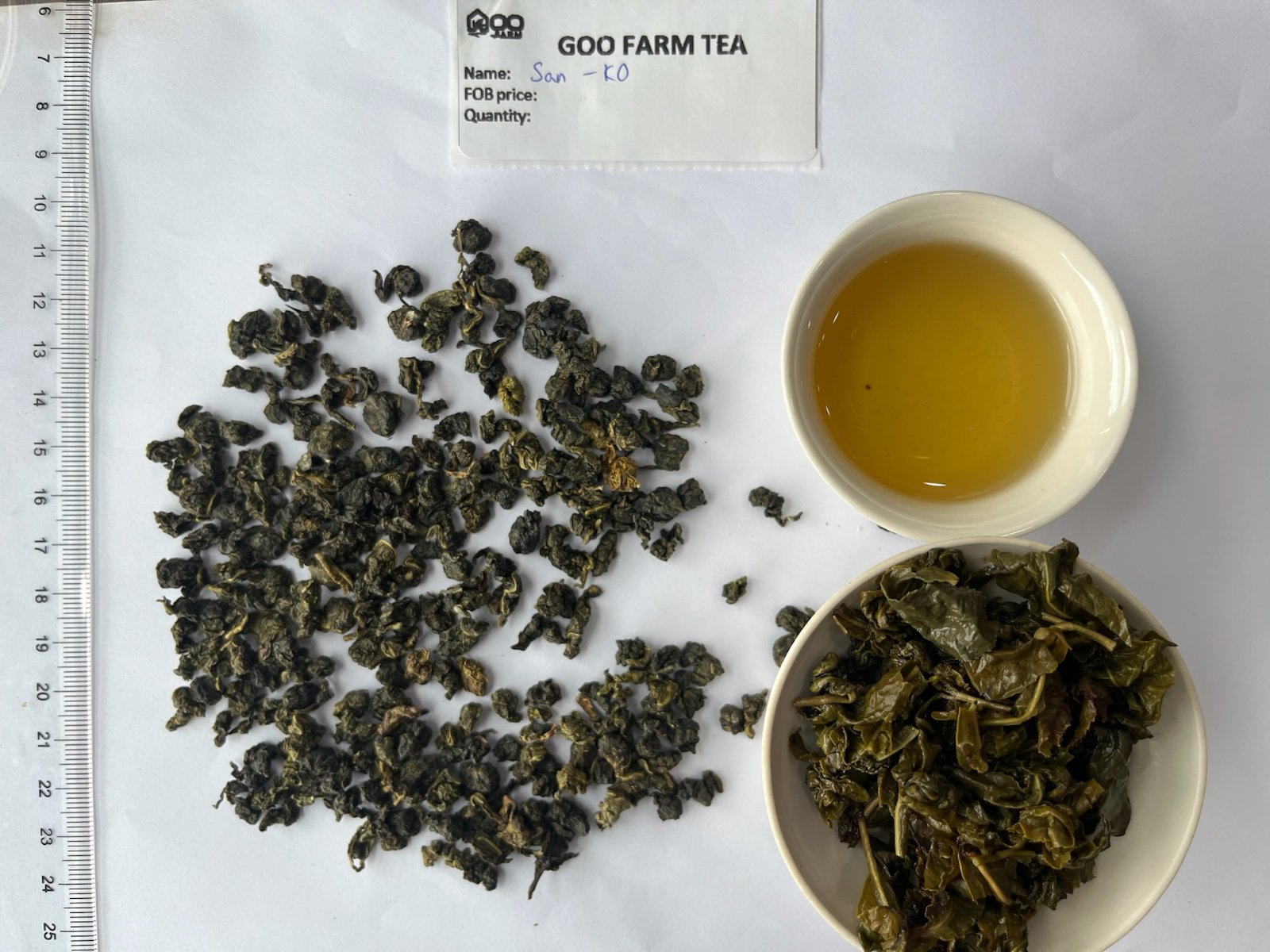
Vietnam oolong tea sits between green and black tea: the leaf is partially oxidized, then rolled into small, tight balls that open slowly in the pot and can be infused several times. The oolong we produce at Goo Farm is a green, lightly oxidized oolong of the Jin Xuan grade, with a bright yellow liquor, a floral and milky aroma and a light, sweet, creamy taste. This guide explains how Vietnam oolong tea is made, what the Jin Xuan grade means, how to read an oolong specification, how to brew and store it, and how to buy it in bulk for loose-leaf tea, premium tea bags or milk tea.
What oolong tea is
Tea type is decided by oxidation. Green tea is heated soon after plucking so that it does not oxidize; black tea is rolled and left to oxidize fully. Oolong is in between: the leaf is withered, gently bruised so that only the edges oxidize, then heated to stop the process at the chosen point. Depending on how far oxidation is allowed to go and whether the tea is roasted afterwards, an oolong can taste close to a fresh green tea or close to a mellow black tea.
Our oolong is at the green end of that range. Oxidation is kept short and carefully controlled so the leaf keeps its natural freshness and vibrant green color, and the tea is not roasted. In the cup that gives a bright yellow liquor and a soft, floral, milky character rather than the dark, toasty notes of a heavily roasted oolong.
How Vietnam oolong tea is made
Our oolong comes from tea gardens in the misty highlands of Vietnam, where the cool climate and mineral-rich soil suit the Jin Xuan cultivar, and is processed in our factories, where oolong is one of the teas we manufacture alongside black tea, green tea and jasmine tea. The Yen Bai factory is certified to ISO 22000:2018 for the manufacturing and trading of dried tea.
The process has more steps than green or black tea, and each one shapes the final cup:
- Plucking. Oolong is made from more mature leaf than green tea — typically a bud with two or three open leaves — because the larger leaf stands up to the bruising and rolling that follow.
- Withering. The leaf is withered first in sunlight or warm air and then indoors, losing moisture and softening.
- Bruising and partial oxidation. The leaf is tossed or tumbled gently and left to rest, several times over. The bruised leaf edges begin to oxidize while the center stays green. For a green oolong this stage is kept short.
- Kill-green. The leaf is heated in a pan or drum to stop oxidation at the chosen point.
- Rolling and ball-shaping. The hot leaf is rolled, then wrapped in cloth and rolled again many times until it forms the small, tight balls that are the signature of this style.
- Drying. The balls are dried to a low, stable moisture content. Our green oolong is left unroasted to keep its fresh, milky character.
- Sorting. Stems and broken leaf are removed before packing.
Every order we ship is the same as or better than the sample you approved.
The Jin Xuan grade
Our oolong is listed as Vietnam Oolong Green Tea, Jin Xuan grade. Jin Xuan is a tea cultivar originally developed in Taiwan and now widely grown in the highlands of Vietnam. It is known for a naturally creamy, milky note in the aroma and taste — the reason Jin Xuan oolong is often called milk oolong. That note comes from the leaf itself, not from added flavor.
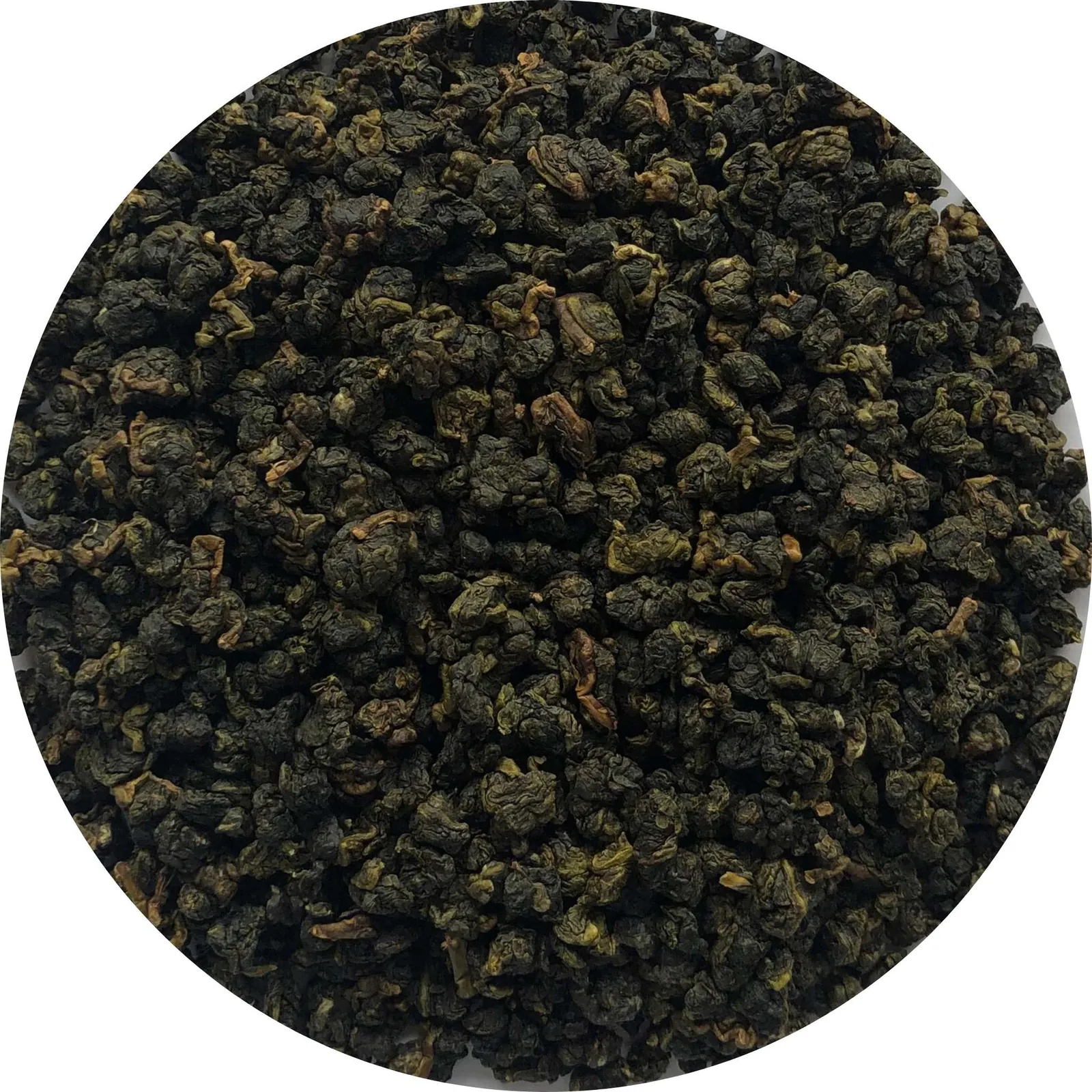
In the cup, our Jin Xuan oolong shows:
- Liquor: bright yellow.
- Appearance: small, tight, green balls.
- Aroma: floral and milky.
- Flavor: light, milky and sweet, with a subtle hint of cream in the aftertaste.
Because the leaf is rolled whole into balls, the tea unfurls gradually and can be infused three or four times, each infusion a little different from the last. That makes it a good fit for loose-leaf retail and for tea rooms, as well as for milk tea where a naturally creamy base is wanted.
How to read an oolong specification
When you ask us for an oolong specification, look for the same four lines you see on our product page — liquor, appearance, aroma and flavor — plus:
- Oxidation level and roast. Ours is a lightly oxidized, unroasted green oolong. A buyer used to roasted Tie Guan Yin or dark Wuyi oolongs should expect a very different, fresher cup.
- Leaf form. Ball-rolled, with the proportion of broken leaf and stem stated.
- Cultivar. Jin Xuan.
- Harvest season. Spring and autumn harvests are generally the most aromatic; tell us which season you prefer and we will advise what is available.
As with every tea, two lots of the same grade can differ in aroma and strength with the season and the garden. Start with a sample, brew it the way your customers will drink it, and compare it with your current supply. The approved sample becomes the standard for the order.
How to brew Vietnam oolong tea
Green oolong is forgiving, but a few habits bring out the milky, floral notes:
- Use water well below boiling — around 80–85 °C for a light green oolong like ours — and steep for one to three minutes.
- Use enough leaf — the balls expand to several times their dry size — and give the first infusion a little longer so the balls can open.
- Re-infuse. Three or four infusions are normal; shorten or lengthen the steeping time to taste.
- For milk tea and iced tea, brew stronger and cool quickly; the creamy note carries well with milk.
Our blog has a step-by-step guide: How to brew a perfect cup of oolong tea.
Which products Vietnam oolong tea is used for
- Loose-leaf retail tea: the natural home of ball-rolled oolong. The tight green balls look premium in a tin or a window pouch, and the multiple infusions give customers value.
- Premium pyramid tea bags: whole balls in a roomy pyramid bag open properly; flat paper bags do not suit this tea.
- Milk tea and bubble tea: oolong milk tea is one of the most popular bases in Asian milk tea chains, and Jin Xuan's own creaminess pairs naturally with milk.
- Ready-to-drink and iced tea: a light oolong gives a clean, floral iced tea with less bitterness than green tea.
- Flavored blends: osmanthus, peach and other fruit or flower flavors sit well on a green oolong base.
If you also sell green tea, our Vietnamese green tea grades guide covers the grades that usually go alongside oolong in a specialty range.
Packing and storage
Green oolong is more sensitive to air, light and moisture than black tea: its fresh aroma fades if it is stored loosely for long. For bulk export we therefore recommend:
- Vacuum aluminum bags inside export cartons — the standard packing for green oolong, keeping aroma and color through shipping and storage.
- PP/PE bags or kraft paper sacks for larger volumes where the tea will be repacked quickly on arrival.
We also pack under your own brand: retail tins, zip pouches and small vacuum packs, custom-printed bulk bags and private-label tea bags. See our packing and loading options. Ball-rolled oolong is dense, so a container carries a good weight of it; tell us your packing and we will confirm the quantity per 20-foot or 40-foot container.
Once opened, store oolong in an airtight container away from light, heat and strong smells, and reseal the vacuum pack or decant into tins quickly.
Where Vietnam oolong tea is sold
Goo Farm Tea Vietnam produces up to 6,500 tons of tea a year across all categories and has exported tea to more than 30 countries, from the CIS and the Middle East to Southeast Asia and Africa. Oolong is a smaller, specialty part of that range: the buyers are specialty tea retailers and tea rooms, milk tea and bubble tea brands, and blenders who want a creamy green oolong base at a Vietnamese price. Tell us how your customers drink it and we will suggest the right lot to sample.
常见问题
Is Vietnam oolong tea green tea or black tea? Neither. Oolong is partially oxidized, between green and black. Ours is a lightly oxidized green oolong, so it is closer to green tea in color and freshness, with a milky, floral character of its own.
What does Jin Xuan mean? Jin Xuan is the cultivar — the tea plant variety — from which the tea is made. It is known for a natural milky note, which is why Jin Xuan oolong is often sold as milk oolong. No flavoring is added.
Is milk oolong flavored? Ours is not. The creamy note comes from the Jin Xuan leaf and the light processing. Some milk oolongs on the market are flavored; ask for the specification and taste a sample.
How many times can oolong be infused? Three or four infusions are normal for ball-rolled oolong, more with a small pot and short steeps.
Can oolong be used in tea bags? Yes, in pyramid bags with room for the balls to open. For flat paper bags, a broken grade of green or black tea is a better fit.
Do you supply samples? Yes. Tell us the quantity and packing you have in mind and we will send a sample with a specification sheet.
索取样品和报价
Tell us the quantity, the packing and your destination, and we will reply with a sample of our Jin Xuan oolong and a quotation. Contact us, or see the oolong tea and other specialty teas in our range, including Vietnamese yellow tea.