 EN
EN AR
AR RU
RU ZH
ZH UZ
UZ HI
HI UR
UR FA
FA FR
FR
Vietnam Tea Exporters: How to Choose a Reliable Supplier
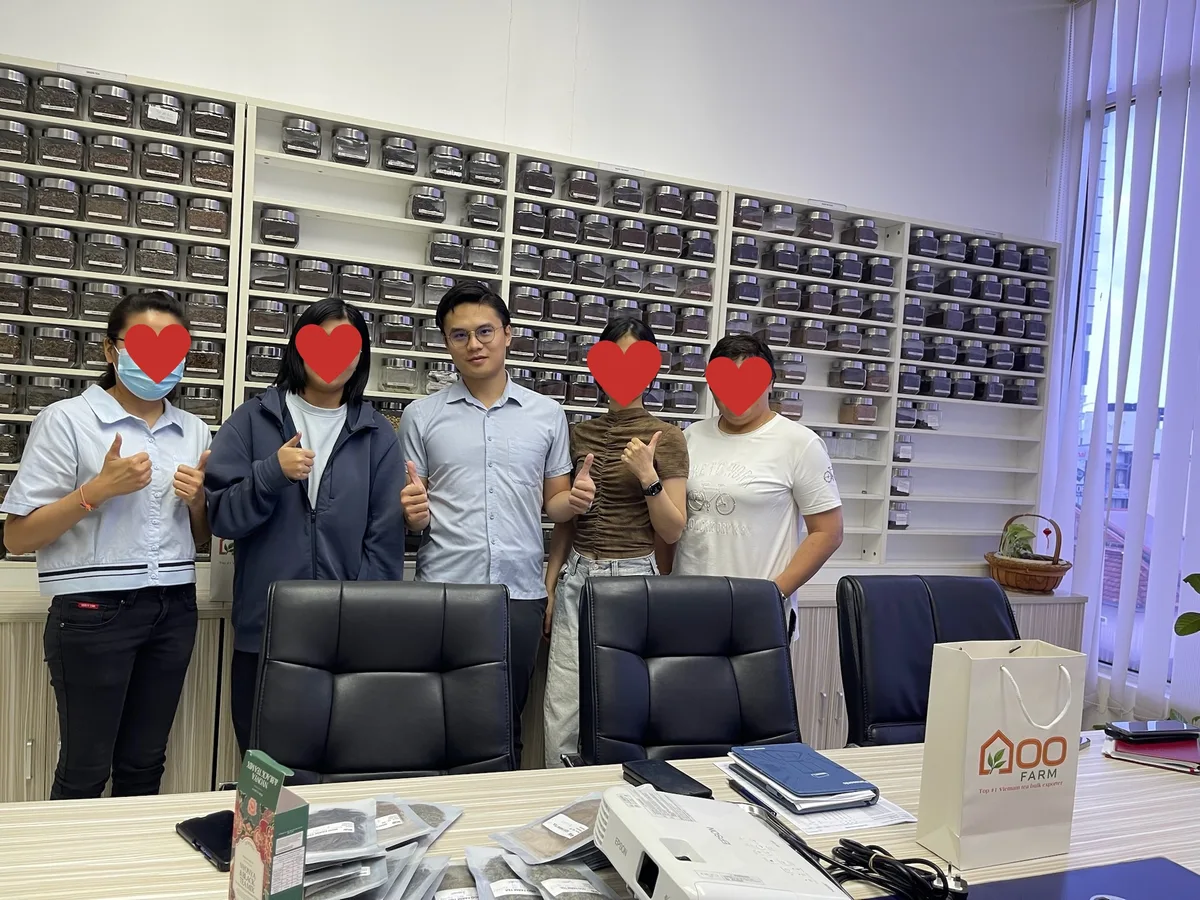
Vietnam has hundreds of tea exporters, from former state corporations to private factories, farmers' cooperatives and trading companies. The agriculture ministry reported 257 industrial-scale tea processing companies in early 2024, and a 2021 report by the trade ministry's research institute put the number of organisations and individuals exporting tea at about 370, selling to 74 countries. This guide for blenders, packers and importers explains how Vietnam tea exporters differ, gives 12 checks to run before you choose a supplier, lists the red flags, and shows how we answer each check ourselves, so you can hold any exporter, including us, to the same standard.
Who Vietnam tea exporters are: four groups
Vietnam is the world's fifth-largest producer and exporter of tea, grown from the northern midlands and mountains to the Central Highlands, with Thai Nguyen, Phu Tho and Lam Dong as the main centres. In 2025 it exported 136,952 tons worth nearly US$238 million, an average of US$1,737 a ton, and Pakistan took 30.1% of the volume. In 2020 black tea made up 51% of exports and green tea, including scented tea and oolong, 48%.
Vietnam tea exporters fall into four groups:
- Former state companies, now joint-stock. The national tea corporation was founded in 1958 under the agriculture ministry and became a joint-stock company in 2015; several provincial tea companies in the north and in Lam Dong grew out of state farms and factories in the same way. They tend to have large tea areas and older factories.
- Private and foreign-invested factories. They range from groups running more than ten factories to single-site processors in one tea district. Some of the largest estates were built by foreign tea companies in the 2000s and have since changed hands.
- Cooperatives. In specialty areas farmers process their own leaf: in 2021 VietnamPlus counted eight tea cooperatives in Hoang Su Phi, a shan tuyet district of Ha Giang, besides 20 large and about 300 household processing units.
- Trading companies. Many exporters buy finished tea from factories and assemble export lots. A good trader adds blending, grading and paperwork, but does not control the leaf or the process.
Even factories buy much of their leaf: the average tea-growing household farms about 0.2 ha, and only about 10% of factories have their own raw-material areas or tightly linked growers.
For a neutral cross-check, the Ministry of Industry and Trade publishes a yearly list of reputable exporters by product group, including tea. The 2022 list was approved in December 2023 and is public (see Sources). A company on it has passed a check of its export turnover, tax and customs record; a company not on it may simply not have applied.
12 checks before you choose a Vietnamese tea supplier
- Own factory or trader. Ask for the factory address, the business registration and a live video call from the processing floor. A trader can be a good partner if it says so; what matters is knowing who controls the tea.
- Where the leaf comes from. Ask which gardens supply the factory, whether any are its own and how leaf is checked on arrival. With only one factory in ten controlling its raw material, the answer tells you a lot.
- Certificates you can verify. Look for food safety certification (ISO 22000, FSSC 22000 or HACCP) and, if your market needs them, Rainforest Alliance, organic or Halal. Check the holder, site address, scope (manufacturing, not only trading), edition (ISO 22000:2018 replaced the 2005 edition after a three-year transition) and expiry date, then look the number up on the certification body's register, IAF CertSearch, the FSSC public register or the Rainforest Alliance list of certificate holders.
- Sample-to-shipment consistency. Make the approved sample the contract standard, keep a sealed counter-sample, and before paying the balance brew it beside a pre-shipment sample drawn from the packed lot.
- Pesticide residues. In the EU, a pesticide with no specific limit for tea defaults to 0.01 mg/kg, and in March 2026 Vietnam's agriculture ministry named tea among the exports facing significant impact from planned tighter EU limits. US limits are the EPA tolerances in 40 CFR Part 180. Ask for a recent multi-residue report from an accredited laboratory on your actual lot.
- Moisture, particle size and chemistry. ISO 3720 sets chemical requirements for black tea, such as a water extract of at least 32%, total ash of 4–8% and crude fibre of no more than 16.5%; ISO 11287 covers green tea. ISO 3720 sets no moisture limit for tea as received, so write a maximum moisture and its test method (ISO 1573) into the contract, plus the sieve sizes for fannings and dust.
- Loading per container. A 40-foot high cube holds about 13 tons of large-leaf orthodox tea and up to 28 tons of dust in our own loading table, so compare quotes per ton delivered, not only per kilogram FOB.
- Export documents. Expect a commercial invoice, packing list, bill of lading, certificate of origin in the form your trade agreement needs, phytosanitary certificate and certificate of analysis, all in the seller's name. Since 1 July 2025 Vietnam has 34 provinces instead of 63 (Yen Bai is now part of Lao Cai, Vinh Phuc part of Phu Tho), so addresses may use either name.
- Payment terms. Common terms are a bank-transfer deposit with the balance against a copy of the bill of lading, cash against documents, or a letter of credit. Pay only into a company account in the seller's name, confirm any new bank details by phone, and fix the Incoterms 2020 rule (FOB, CFR or CIF) in the contract.
- Factory audit or visit. Visit, or hire an independent inspection company to audit the factory and inspect the lot before loading. A supplier that welcomes both is easier to trust.
- References and track record. Ask for buyers you can contact in your market, the trade fairs it attends and the markets it already ships to, and cross-check official lists such as the ministry's reputable exporters.
- Communication. Written specifications, one named contact and replies within a working day matter as much as price.
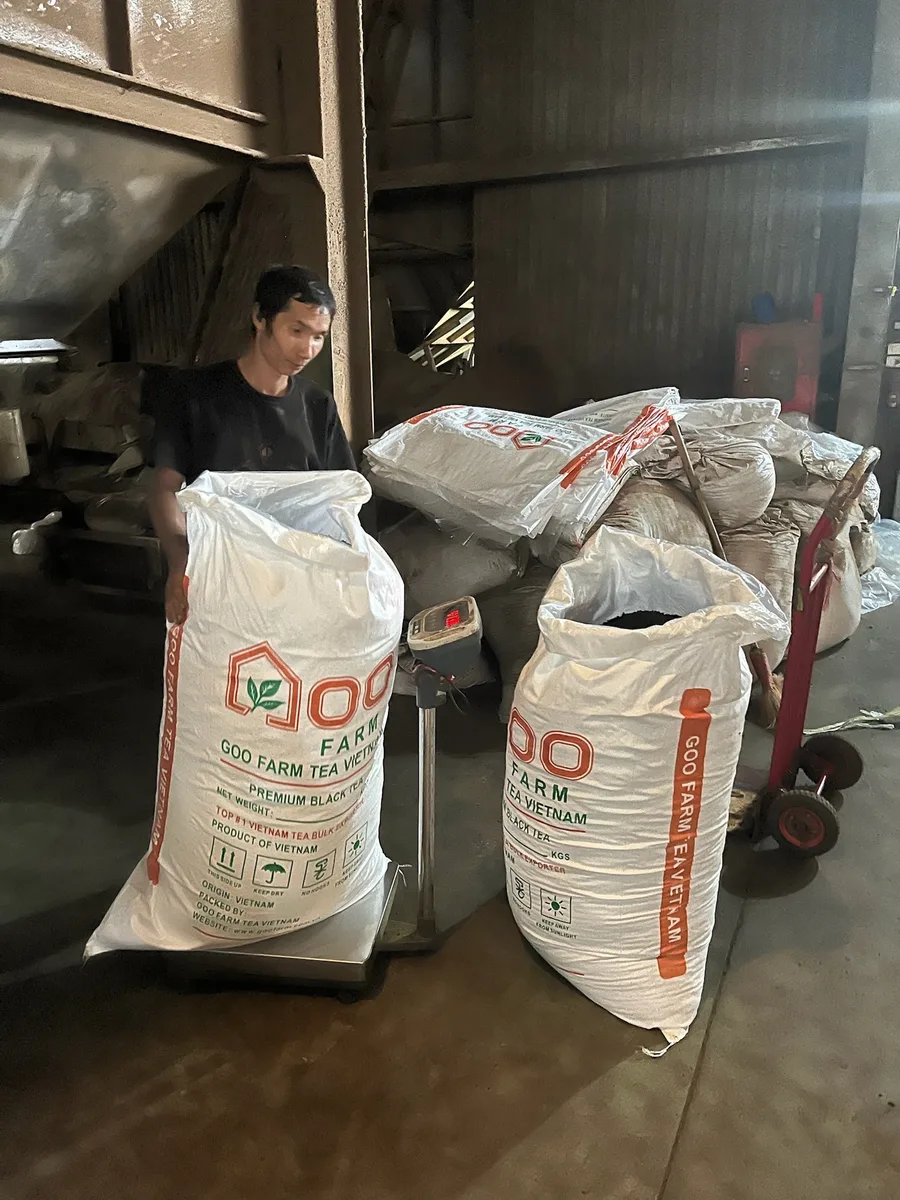
How Goo Farm Tea Vietnam answers the 12 checks
We publish this guide, so it is fair to ask how we measure up. The table gives our answer to each check and, where one exists, the place you can verify it without taking our word for it. Ask any Vietnam tea exporter you are comparing for the same table.
| Check | Where to verify it | Goo Farm Tea Vietnam |
|---|---|---|
| 1. Own factory or trader | Factory address, business registration, video call | Manufacturer, not a trader: two factories of 7,000 m² each in Phu Tho and Yen Bai (Nghia Hung Village, Nghia Tam Commune, now Lao Cai Province). We run the withering, rolling, CTC cutting, oxidation, drying and sorting lines ourselves. See our factories and gardens; a live video call from the floor is yours for the asking. |
| 2. Where the leaf comes from | Garden list, leaf checks on arrival | Fresh leaf from our own and partner gardens in Phu Tho, Yen Bai, Thai Nguyen, Lao Cai, Lai Chau, Ha Giang, Moc Chau and Nghe An, selected by region for the grade it suits. |
| 3. Certificates you can verify | Certification body's register, IAF CertSearch | ISO 22000:2018 for the Yen Bai factory, scope "manufacturing and trading of dried tea", certificate No. 31905-FSV issued by Vinacontrol on 6 July 2026, valid until 5 July 2029. Look it up on Vinacontrol's certificate lookup or see the copy on our home page. Our factory is registered with China's GACC. |
| 4. Sample-to-shipment consistency | Sealed counter-sample, pre-shipment sample from the packed lot | The sample you approve is the reference for the whole order: every lot is sorted and brewed against it before packing, and must be the same as or better. We draw a pre-shipment sample from the packed lot when you ask for one. |
| 5. Pesticide residues | Multi-residue report from an accredited laboratory on your lot | We arrange testing of your lot by an independent laboratory such as SGS or Dai Viet Control against the limits of your market (EU MRLs or US EPA tolerances), agreed before the order. |
| 6. Moisture, particle size and chemistry | Specification sheet, ISO 3720 / ISO 11287 values, sieve sizes | Each sample comes with a specification sheet: appearance, liquor, aroma and flavour, moisture and sieve size for broken grades, fannings and dust. The sheet goes into the contract. |
| 7. Loading per container | Loading table per grade | Published on our packing and loading page: about 13 tons of large-leaf orthodox tea to 28 tons of dust per 40-foot high cube, in PP/PE bags, paper sacks, cartons or vacuum aluminium bags. |
| 8. Export documents | Full set in the seller's name | Commercial invoice, packing list, bill of lading, certificate of origin, phytosanitary certificate and certificate of analysis, all issued in the name of Goo Farm Tea Vietnam Company Limited. |
| 9. Payment terms | Proforma invoice, Incoterms 2020 rule, company bank account | Quoted FOB or CIF under Incoterms 2020. Payment terms are written into the proforma invoice, and payment goes only to the company account of Goo Farm Tea Vietnam Company Limited, never to a personal account. |
| 10. Factory audit or visit | Your own visit or an inspection company | Visits to Phu Tho and Yen Bai are welcome, and SGS or Dai Viet Control can audit the factory and inspect your lot before loading. |
| 11. References and track record | Buyers in your market, fairs, export markets | Our tea goes to buyers in more than 30 countries across the CIS, the Middle East, Southeast Asia and Africa. We exhibited at THAIFEX – Anuga Asia 2026 in Bangkok and Gulfood 2024 in Dubai, and keep an Alibaba storefront. Buyer references for your market on request. |
| 12. Communication | One named contact, written specifications, reply time | One named contact from first enquiry to shipment: antony@goofarm.com.vn, WhatsApp or Viber +84 823 751 769, WeChat and Telegram. Every quotation comes in writing with the specification sheet. |
Two things we do not claim. We do not state a founding year for the company, and we do not promise every grade in any quantity at short notice: our factories make about 7,000 tons a year across orthodox and CTC black tea, green tea, oolong and tea dust, and lead time depends on the grade and the season. See about us for the company facts in one place.
Red flags
- A price far below other quotes for the same grade, with no explanation.
- No factory address, or a certificate issued to a different company or site.
- A certificate number you cannot find on the issuer's register, or one that has expired.
- Payment into a personal account, or bank details that change by email.
- No pre-shipment sample from the actual lot, or a refusal of independent inspection.
- Promises of any grade, in any quantity, at short notice.
Câu hỏi thường gặp
How many tea exporters are there in Vietnam? Several hundred: a 2021 report put the number of organisations and individuals exporting tea at about 370, and the agriculture ministry reported 257 industrial-scale tea processing companies in early 2024.
Is it better to buy from a factory or a trading company? Neither by default. A factory controls the leaf and the process and can hold a standard over many shipments; a trader can combine grades from several factories in one container. Ask which one you are dealing with, and check it.
Which certificates should a Vietnamese tea supplier have? A food safety certificate such as ISO 22000, FSSC 22000 or HACCP for the factory that makes your tea, plus what your customers require, such as Rainforest Alliance, organic or Halal.
How do I check a supplier's ISO 22000 certificate? Look up its number on the certification body's online register or IAF CertSearch, and check the company name, site address, scope, edition and expiry date. Our own certificate, No. 31905-FSV, can be checked on Vinacontrol's lookup page linked in the table above.
What pesticide tests do I need for the EU or the US? A multi-residue test from an accredited laboratory on the actual lot, compared with EU maximum residue levels or US EPA tolerances. Agree the laboratory and the limits before you order.
Is Goo Farm Tea Vietnam a manufacturer or a trader? A manufacturer: we make the tea we sell in our own factories in Phu Tho and Yen Bai. See about us and our factories and gardens.
Yêu cầu mẫu và báo giá
If you are comparing Vietnam tea exporters, we would be glad to be on your shortlist, and to answer the 12 checks in writing. Tell us the grade, quantity, packing and destination, and we will send samples with a specification sheet and a quotation. Contact us, see how we work on our wholesale tea page, or read our guides to CTC black tea, orthodox black tea and tea dust.
Nguồn tham khảo
All links were checked on 4 October 2026.
- Government of Vietnam portal: Tea exports: raising quality standards, creating value (in Vietnamese), 28 February 2026.
- Ministry of Agriculture and Environment: Vietnamese tea industry establishes a new global standing, 16 January 2026; Caution urged as EU tightens limits on fruits, tea, coffee, 25 March 2026.
- VnExpress: Vietnam's tea exports lowest in seven years (in Vietnamese), 14 January 2024.
- Vietnam Institute of Strategy and Policy for Industry and Trade: Vietnam's tea industry: situation and solutions (in Vietnamese), 23 July 2021.
- Ministry of Industry and Trade: Decision 3235/QD-BCT on the 2022 list of reputable exporters, 14 December 2023, via LuatVietnam.
- VietnamPlus: Phin Ho shan tuyet tea, well-known specialty of Ha Giang, 19 July 2021.
- LuatVietnam: Resolution 202/2025/QH15 on the reorganisation of provincial-level administrative units, 12 June 2025.
- FoodNavigator: Food safety standard ISO 22000 release marks start of 3-year transition period, 20 June 2018.
- Certificate registers: IAF CertSearch, FSSC public register and Rainforest Alliance list of certificate holders.
- European Union: Regulation (EC) No 396/2005 on maximum residue levels of pesticides and the EU Pesticides Database.
- US eCFR: 40 CFR Part 180, tolerances for pesticide chemical residues in food.
- ISO: ISO 3720:2011 Black tea, ISO 11287:2011 Green tea and ISO 1573:1980 Tea, loss in mass at 103 °C.
- International Chamber of Commerce: Incoterms 2020.