AR
 RU
 ZH
 UZ
 HI
 UR
 FA
 FR
 VI

Iran Tea Importers: Vietnamese Tea, Rules and Risks in 2026

Iran needs about 110,000 tons of tea a year, according to its tea importers' union, and grows about 29,000. The rest has to be imported, yet legal imports fell from about 75,000 tons in Iranian year 1402 to about 42,000 tons in 1403, as currency subsidies ended, permits tightened and, in 2026, war closed the Gulf. This guide is for Iran tea importers and the trading houses that supply them. It sets out where Vietnamese orthodox tea can fit, the import rules reported in 2024–2026, the sanctions position on food and the practical limits on shipping and payment today.
Checked in October 2026 against Iranian, Indian and Sri Lankan trade reports, the US Treasury and shipping reports. Iranian import rules change by season, and the situation in the Gulf changes weekly. This is general information, not legal advice.
Supply and demand at a glance
| Figure | Period | |
|---|---|---|
| National need, importers' union estimate | about 110,000 tons a year | 2024 |
| Domestic dried tea output | about 29,000 tons, from about 22,000 ha, mostly in Gilan | 2024/25 |
| Legal imports | about 75,000 tons, then about 42,000 tons | Iranian years 1402 and 1403 |
| Indian orthodox tea bought by Iran | more than 35 million kg | 2024 |
| Sri Lankan bulk tea shipped to Iran | US$62 million | 2025 |
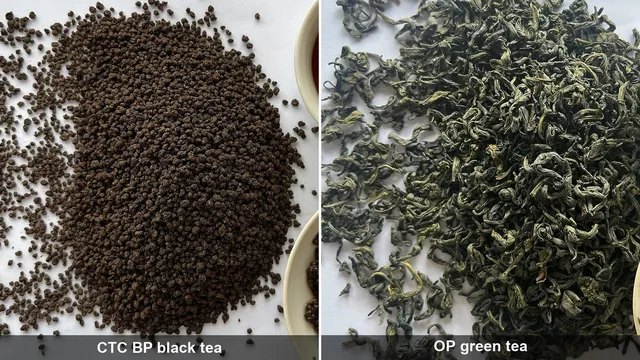
Most Iranians drink black tea. India's tea exporters say that Iran took more than a quarter of India's orthodox exports in 2024, mostly Assam tea, and Ceylon tea has a long history in the market. Both point to whole-leaf and broken orthodox tea rather than CTC. Much of the Indian tea for Iran travels through trading companies in Dubai.
Where Vietnamese tea can fit
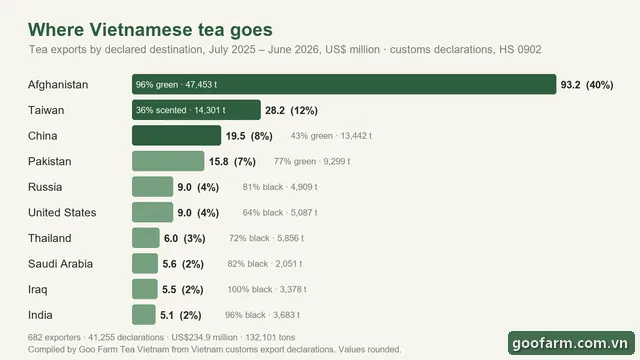
Vietnam is a small supplier to Iran today: Vietnamese customs data does not list Iran separately, and mirror data shows only small amounts. Its role is the one it plays in other orthodox markets, a lower-cost leaf for blends next to Indian and Ceylon tea. The grades to sample:
| Grade | Leaf | Indicative FOB Hai Phong, US$/kg | Tons / 40HC |
|---|---|---|---|
| OP black tea | Black, lightly curled whole leaf of even size | 1.25–1.77 | 17 |
| OPA black tea | Long, lightly twisted whole leaf, our largest | 0.84–1.39 | 13 |
| Pekoe black tea | Heavy, firmly curled leaf, orange-red cup | 1.29–1.77 | 16 |
| FBOP and BOP | Short broken leaf; FBOP with a few silver tips | 1.19–1.71 | 22; 20 |
Indicative prices in October 2026; live figures on our Vietnam tea prices page.
Cup the Vietnamese grades next to the Assam or Ceylon tea you blend today, brewed the Iranian way, and judge colour, strength and aroma together. Our comparison of OPA, OP and Pekoe shows the three whole-leaf grades side by side.

Import rules reported in 2024–2026
The rules for tea have changed often since the Debsh Tea scandal of 2023, in which one importer was found to have received US$3.37 billion of subsidised foreign currency in 2019–2022, part of which it allegedly resold on the free market. What Iranian sources report:
- No subsidised currency for tea. Tea lost the preferential exchange rate around 2023, and on 1 January 2026 the government ended the subsidised dollar for nearly all goods. Importers buy currency at market or exchange-centre rates.
- Seasonal order registration. Iranian press reported in 2025 that import orders for tea are registered in seasonal windows opened by the Ministry of Agriculture Jihad, with quotas set for each period.
- Buying domestic tea. In 2024, importers had to buy more than 20,000 tons of Iranian tea as a condition of their import permits, according to the importers' union.
- Higher charges. The same union reported that customs duties and fees on imported tea rose from 1% to 4%, and VAT on imported tea from 1% to 10%.
Ask your customs agent for the rules of the current quarter before you sign, because the quota, the permit conditions and the rates are set again each season.
Documents. Imported tea must meet Iranian standards, including pesticide residue limits. Older guidance for Indian exporters listed what the Iranian food and drug authority asked for a health licence: a certificate of analysis against Iranian standards, a certificate of free sale, food safety certification and details of the producing factory. Ask your agent for the current list. Our Yen Bai factory is ISO 22000:2018 certified; our SGS test report shows the kind of residue analysis we can supply.
Sanctions: what applies to food
- US sanctions. The US Treasury's guidance (OFAC FAQ 830) states that persons selling food, agricultural commodities, medicine or medical devices to Iran will not be sanctioned under the relevant executive order, as long as no sanctioned party, such as an entity on the SDN list, is involved.
- UN sanctions. The UN sanctions reimposed in September 2025 cover arms, nuclear and missile matters, asset freezes and travel bans; we found no UN embargo on food.
- Banks. Payments in US dollars clear through US banks, and many banks decline any transaction that touches Iran, whatever the product. This, more than the law on food, is what limits the trade in practice.
Before any contract, screen the buyer, the consignee, the shipping line and every bank against the sanctions lists, and agree in writing how payment will be made. Indian tea for Iran has long been sold through trading companies in Dubai, which carry the Iranian risk and pay the exporter.
Shipping in 2026
Bandar Abbas handles most of Iran's container trade. Since the war that began on 28 February 2026, the Strait of Hormuz has been largely closed to commercial shipping; the United States blockaded Iranian ports from 13 April to 29 May 2026; and in March Sri Lankan exporters said shipments to Iran had almost stopped and that about US$50 million was owed to them for tea already shipped. From late June, Iranian goods began to move through Jebel Ali again.
For now, any shipment to Iran depends on a route and an insurer your forwarder can confirm in writing. Buy FOB Hai Phong and keep the freight in the hands of a forwarder who works the route, so the routing can change without reopening the contract.
Frequently asked questions
How much tea does Iran import? About 42,000 tons in Iranian year 1403 (2024/25) through legal channels, down from about 75,000 tons a year earlier, according to the importers' union. The union puts national need at about 110,000 tons a year.
Where does Iran import tea from? Mainly from India, especially orthodox Assam tea, and from Sri Lanka and Kenya, with much of the trade passing through the UAE.
Is it legal to sell tea to Iran? Under US guidance, sales of food to Iran are not sanctioned unless a sanctioned person or entity is involved, and UN sanctions do not cover food. Banks, however, often refuse such payments. Take legal advice for your own case.
Does Iran still give subsidised dollars for tea imports? No. Tea lost the preferential rate around 2023, and the subsidised rate was ended for nearly all goods on 1 January 2026.
Which Vietnamese tea suits the Iranian market? Whole-leaf and broken orthodox black tea: OP, OPA, Pekoe, FBOP and BOP, for blending with Indian or Ceylon tea.
Request samples
Goo Farm Tea Vietnam makes orthodox and CTC black tea and green tea at factories in Phu Tho and Yen Bai. If you trade tea into Iran, tell us the grades you blend, your port of delivery and your payment route, and we will send samples with an indicative FOB quotation. Contact us.
Sources
- Tejarat News, statement of Iran's tea union on currency, permits and duties, 31 December 2024; Donya-e-Eqtesad, same statement, 2 January 2025.
- Tehran Times, report on Iran's tea imports and production, 17 March 2025; Trend News Agency, Iran's tea procurement, 21 June 2025.
- The Statesman via Asia News Network, India's orthodox tea exports and Iran, 26 June 2025.
- Sri Lanka Export Development Board, Market and country brief on Iran 2025, 2026.
- Iran International, report on the Debsh Tea case, 2 December 2023.
- Iran International, end of the subsidised dollar, 1 January 2026.
- US Treasury OFAC, FAQ 830, 2020.
- Siasat, Sri Lanka tea industry faces losses from the Iran war, 12 March 2026; Sunday Times (Sri Lanka), Ceylon tea exports fall on Gulf tensions, 19 July 2026.
- bne IntelliNews, UAE reopens ports to Iranian vessels, 2026; Straits.live, Strait of Hormuz brief, 27 October 2026.