AR
 RU
 ZH
 UZ
 HI
 UR
 FA
 FR
 VI

Snow Shan Tea: Old-Tree Green Tea from Northern Vietnam

In short: Snow Shan is tea from old, unpruned Shan trees above 1,000 meters in northern Vietnam, named for its white, downy buds. Goo Farm's is a mellow, floral green tea at USD 1.50–4.00 per kg FOB Hai Phong; organic grades USD 12.53–44.41.
High in the mountains of northern Vietnam, some tea does not grow in neat, waist-high rows. It grows on trees: tall, old, unpruned trees scattered through forest and fields more than 1,000 meters above sea level. The young leaves of these trees are covered in a fine white down, and that down gives Snow Shan tea its name: the buds look as if they had been dusted with snow. This article is about that tea: where it comes from, why it tastes so different from the green tea most buyers know, what our Snow Shan green tea and our three organic Snow Shan grades look like on a specification sheet, and how to sell a single-origin tea without promising more than the leaf can prove.
Fact file: Snow Shan tea at a glance
| Names | Snow Shan, also called snow tea; sold by us as Snow Shan Green Tea and as organic Snow Shan in three grades |
| Origin | High mountains of northern Vietnam |
| Altitude | Above 1,000 meters |
| Source | Old, high-mountain tea trees rather than garden bushes |
| Type | Green tea |
| Dry leaf | Curled leaves with white, downy buds |
| Liquor | Pale yellow (Snow Shan Green Tea) to clear golden yellow (organic grades) |
| Aroma | Fresh and clean |
| Taste | Mellow and floral, lightly nutty; a gentle sweetness and a subtle astringency |
| Indicative FOB Hai Phong | Snow Shan Green Tea USD 1.50–4.00 per kg; organic grades USD 12.53–44.41 per kg (October 2026) |
| Quantity | Small lots; volume and container load confirmed per order |
| Recommended packing | Vacuum aluminum bags inside export cartons |
Why "snow" tea
The down on young tea leaves is made of fine hairs that protect the bud while it is growing. On most tea plants it is barely visible. On the Shan trees of the northern mountains it is thick enough to make the young shoots look as if they had been dusted with frost, and local people named the tea for it: its Vietnamese name means snow. In the trade you will see the name written as Snow Shan, Shan Snow or simply snow tea; they refer to the same family of trees.

The name describes the plant and its origin. It does not, on its own, describe how the leaf was processed. Snow Shan leaf is made into green tea, white tea and black tea by different producers. Ours is a green tea: the leaf is heated to stop oxidation, then curled and dried.
Trees, not bushes
Almost all of the tea Vietnam exports, including our standard grades, comes from tea bushes that are pruned to a flat table at waist height so that pickers can reach the new shoots week after week. Our standard leaf comes from gardens across the northern provinces; you can read about them on our factories and gardens page.
Shan trees are left to grow. They stand among forest and maize fields on steep slopes, in a cool, misty climate where they grow slowly, and they are picked by hand, branch by branch. In the northern mountains the trees are tended largely by Hmong, Dao and other mountain communities, and some of them are said to be several hundred years old.
Two things follow for a buyer. Each tree yields little leaf, so lots are small. And the slow growth at altitude, together with the cool mountain climate, is what growers and tasters credit for the mellow character of the cup.
In the cup
Set a Snow Shan sample next to a standard green tea and the difference is obvious before you taste it. The liquor is pale yellow rather than bright green or bright yellow, and the aroma is fresh and clean rather than grassy.
The taste is where it stands apart. Our standard green tea grades are strong and vegetal, with a clear bitter note, which is what markets that drink green tea with sugar or mint want. Snow Shan is mellow and floral, with a light nuttiness that some tasters compare to chestnut, a gentle sweetness and only a subtle astringency.
A starting point for brewing in a tea shop: about 3 grams of leaf to 150 ml of water at around 85 °C, for two minutes. Then adjust the time to taste. The curled leaf opens over several infusions, so it rewards a second and a third pot.
Snow Shan beside our standard green tea
| Snow Shan Green Tea | Standard whole-leaf grades, e.g. OP and Pekoe green | |
|---|---|---|
| Source | Old trees above 1,000 m in the northern mountains | Pruned garden bushes in the northern provinces |
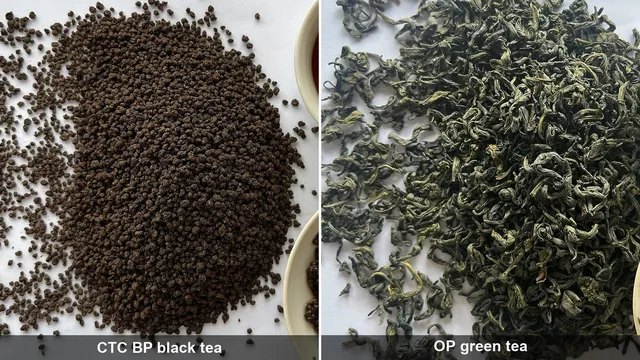
| Dry leaf | Completely curled | Large, well-rolled leaves |
| Liquor | Pale yellow | Bright yellow (OP) or bright green (Pekoe) |
| Taste | Mellow, floral, lightly nutty | Strong, vegetal, distinctly bitter |
| Indicative FOB Hai Phong, USD per kg | 1.50–4.00 | 1.46–2.02 (OP), 1.28–2.30 (Pekoe) |
| Quantity | Small lots, confirmed per order | 17–18 tons per 40HC |
| Best use | Single-origin loose leaf, tea rooms, gift packs | Everyday loose tea, scented and mint tea, blends |
Prices are the indicative ranges on our list in October 2026; the current figures are on our Vietnam tea prices page. Our OP green tea and Pekoe green tea pages, and the guide to Vietnamese green tea grades, describe the standard range.
Organic Snow Shan in three grades
Alongside Snow Shan Green Tea, we now offer organic Snow Shan green tea from a partner garden in the northern mountains. It is hand-picked from old Shan trees and farmed to Vietnam's national organic standard, with no synthetic fertilisers or chemical pesticides. It comes in three grades from the same garden and the same processing, each with its own page and price:
| Grade | Plucking | Indicative FOB Hai Phong, USD per kg | Best for |
|---|---|---|---|
| Organic Snow Shan Premium | One bud and one young leaf | 44.41 | Specialty retail, gift tins, tasting menus |
| Organic Snow Shan Select | One bud and two leaves, hand-sorted | 31.85 | Premium loose tea, pyramid tea bags |
| Organic Snow Shan Standard | One bud and two leaves | 12.53 | Everyday loose green tea, house blends |

The organic grades brew a clear golden yellow liquor, a little deeper than Snow Shan Green Tea, and the infused leaf opens into whole buds and young leaves. They are not EU or USDA certified organic, so they cannot be labelled organic in those markets; each shipment can be tested by an independent laboratory. All three are in our organic tea range.


Selling a single-origin tea honestly
Snow Shan sells on its story, which makes it easy to overstate. Buyers who build a lasting line around it tend to follow a few rules:
- Claim only what the documents show. "Northern Vietnam, above 1,000 m" is a claim we can stand behind for our lots. A named village or a single garden is a claim only the documents for that lot can support.
- Be careful with tree ages. "Old trees" is fair. A number such as "300-year-old trees" needs evidence you could show a regulator or a journalist; without it, leave the number out.
- Be careful with "organic" too. Vietnam's national organic standard is not EU or USDA organic certification. Check what your market requires before the word goes on the pack.
- Sell it by the cup. Mellow, floral and nutty is a profile that surprises people who think green tea is bitter. Tasting notes on the pack and a brewing guide do more than adjectives about mountains.
- Keep the reference sample. The approved sample is the standard for the lot. Keep part of it, so that you can compare the next lot against the same reference.
- Pack small. Tins, small boxes and zip pouches of 50 to 100 grams suit a specialty tea better than large bags, and we can pack them under your brand.
Quantity, price and packing
Snow Shan is not part of our standard container loading table. Production is small and depends on the season, so we confirm the available volume, the minimum quantity and the load per container for each order. Our indicative range for Snow Shan Green Tea is USD 1.50–4.00 per kilogram FOB Hai Phong; the organic grades are USD 12.53 (Standard), 31.85 (Select) and 44.41 (Premium). The price of a lot depends on the season and the quality of the picking.
To keep a specialty leaf fresh, we recommend vacuum aluminum bags inside export cartons. Retail packs under your brand, from tins to zip bags, are described on our packing and loading page.
Snow Shan Green Tea sits in the green tea range of Goo Farm Tea Vietnam next to twelve standard grades made in our own factories in Phu Tho and Yen Bai. The Yen Bai factory is ISO 22000:2018 certified by Vinacontrol, certificate No. 31905-FSV. Tell us the documents your market requires, and we will confirm which ones come with a specialty lot.
Frequently asked questions
What is Snow Shan tea? Tea made from the leaves of Shan tea trees, tall unpruned trees that grow high in the mountains of northern Vietnam. Our Snow Shan Green Tea comes from old trees above 1,000 meters and is made as a green tea.
Why is it called snow tea? The young leaves of Shan trees are covered in a fine white down that makes the shoots look frosted, as if dusted with snow. The Vietnamese name of the tea means the same.
Is Snow Shan always green tea? No. The name refers to the trees and the region. Different producers make Snow Shan leaf into green, white or black tea. Ours is a green tea with completely curled leaves and a pale yellow liquor.
How does it taste compared with ordinary Vietnamese green tea? Mellower and sweeter. Standard green tea grades are strong, vegetal and clearly bitter; Snow Shan is floral and lightly nutty, with only a subtle astringency.
Do you have organic Snow Shan? Yes, in three grades from a partner garden: Premium, Select and Standard. They are farmed to Vietnam's national organic standard, but they are not EU or USDA certified organic.
How much does Snow Shan cost? Snow Shan Green Tea is USD 1.50–4.00 per kilogram FOB Hai Phong; the organic grades are USD 12.53 to 44.41 per kilogram. The price of each lot is confirmed in a written quotation.
Can I order a full container? Production is small and seasonal, so we confirm the available volume and the container load for each order. Tell us the quantity you have in mind when you ask for a sample.
How should Snow Shan be stored? Sealed, cool, dark and away from strong smells, ideally in vacuum aluminum bags until it is repacked.
Request a Snow Shan sample
Tell us how you plan to sell it, the quantity and the destination, and we will send a sample of our Snow Shan green tea or of the three organic Snow Shan grades with the specification sheet. Contact us, or browse our full green tea range.
Sources
- Việt Nam News, Story of Suối Giàng shan tuyết tea in Yên Bái Province: old Shan tea trees above 1,000 m in Yen Bai.
- Vietnam News Agency (VietnamPlus), Ancient tea tree in Yen Bai honoured: Shan Tuyet trees recognised as Vietnam heritage trees.
- Vietnam Agriculture Newspaper, Enhancing protection for the ancient Shan Tuyet tea trees, 18 May 2024.
- ISO, ISO 11287:2011 Green tea: Definition and basic requirements, confirmed 2021.
- Vinacontrol CE, certificate lookup for ISO 22000:2018 certificate No. 31905-FSV, accessed October 2026.