 AR
AR RU
RU ZH
ZH UZ
UZ HI
HI UR
UR FA
FA FR
FR VI
VI
Vietnamese Green Tea Grades: A Practical Guide for Buyers
Buying green tea from Vietnam usually starts with one question: which grade? Vietnamese green tea grades such as OP, OPA, Pekoe, BPS, fannings and dust describe the size and shape of the dried leaf. The grade tells you how the tea looks, how fast it brews and what it is normally used for. This guide explains the green tea grades we produce at Goo Farm, what each one looks like in the cup, and how to choose the right grade for loose-leaf tea, tea bags or blends.
What a tea grade tells you
Tea grading is based on the appearance of the leaf: its size, its shape and how well it is rolled. Our green tea grades fall into four groups:
- Whole-leaf grades (OP, OPA, Pekoe, BOM and Madina) keep the leaf large and rolled. They give a full-bodied cup and look good in loose-leaf packs.
- Broken grades (Broken, PS and BPS) are smaller pieces of leaf. They keep the character of the whole leaf but brew faster and stronger.
- Fannings and dust are the smallest particles. They brew very quickly and are mostly used in tea bags.
- Stalk is made from the tender stems of the tea plant.
A grade is not a quality score on its own. Two lots of the same grade can differ in color, aroma and taste depending on the garden, the season and the processing. That is why every purchase should start with a sample — and why every order we ship is the same as or better than the sample you approved.
How green tea is sorted into grades
Green tea is not oxidized. After plucking, the fresh leaf is heated to stop oxidation, then rolled and dried. The dried tea is passed through sieves and sorted by size and shape: large, well-rolled leaves become the whole-leaf grades, smaller pieces become the broken grades, and the finest particles become fannings and dust.
Our fresh leaf comes from tea gardens in Phu Tho, Yen Bai, Ha Giang, Moc Chau, Lai Chau, Lao Cai, Thai Nguyen and Nghe An, and is processed at our factories in Phu Tho and Yen Bai. The Yen Bai factory is certified to ISO 22000:2018.
Whole-leaf grades: OP, OPA, Pekoe, BOM and Madina
- OP Green Tea (Orange Pekoe): big, well-rolled leaves and a bright yellow liquor. The taste is strong and vegetal, with a distinct bitterness and mild astringency. OP is also the base of our Jasmine OP Green Tea.
- OPA Green Tea: large, slightly open leaves with a bright yellow liquor and a strong, vegetal taste.
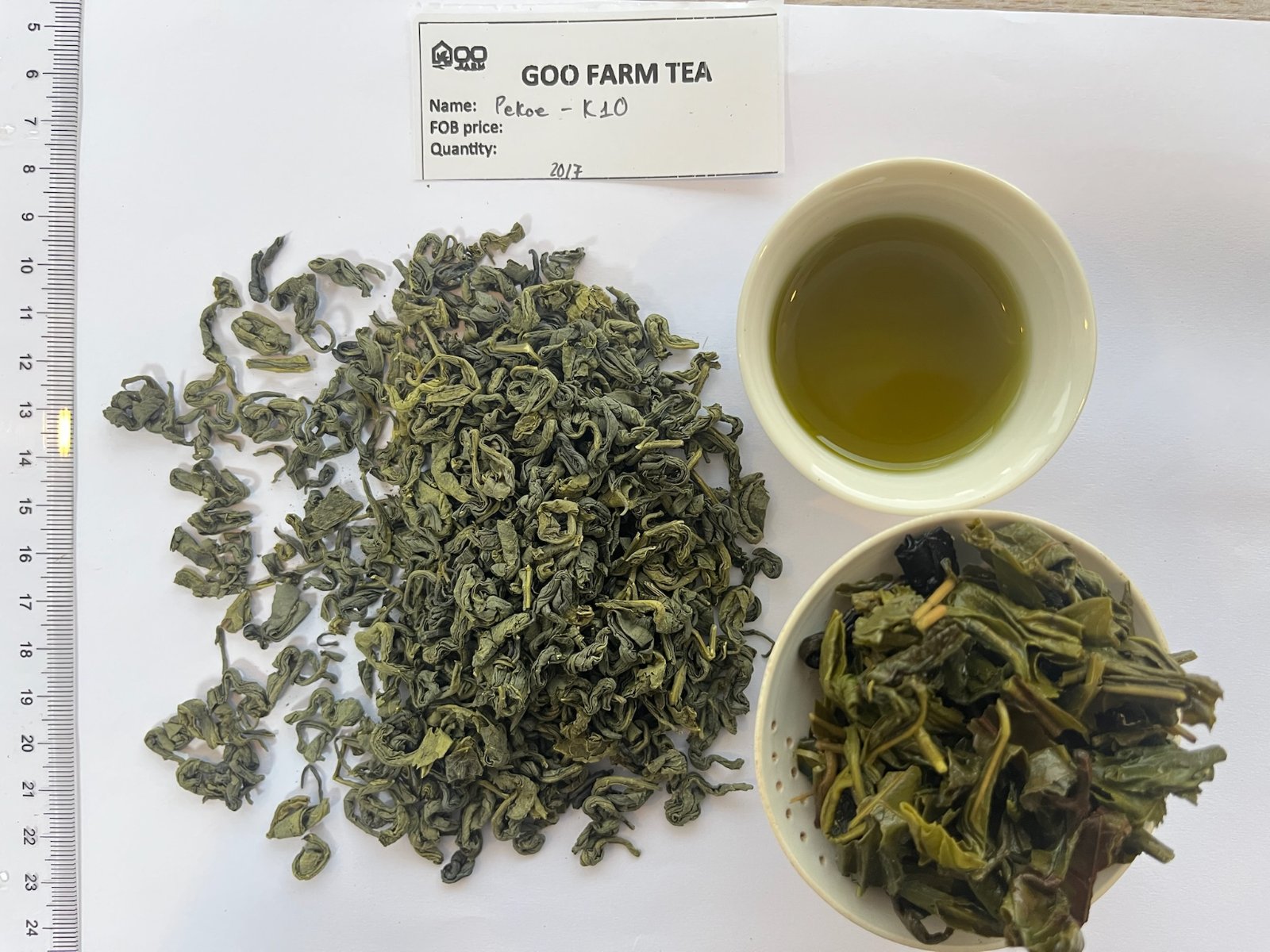
- Pekoe Green Tea: well-rolled, bright green leaves that brew a bright green liquor.
- BOM Green Tea: big, well-rolled leaves from young bud leaves, with a bright green liquor and a strong taste.
- Madina Green Tea: tightly rolled leaves, similar in shape to gunpowder green tea, with a green liquor and a full-bodied flavor with mild astringency.
Whole-leaf grades are the usual choice for loose-leaf retail packs, for tea that is sold on its appearance, and as a base for flavored or scented blends.
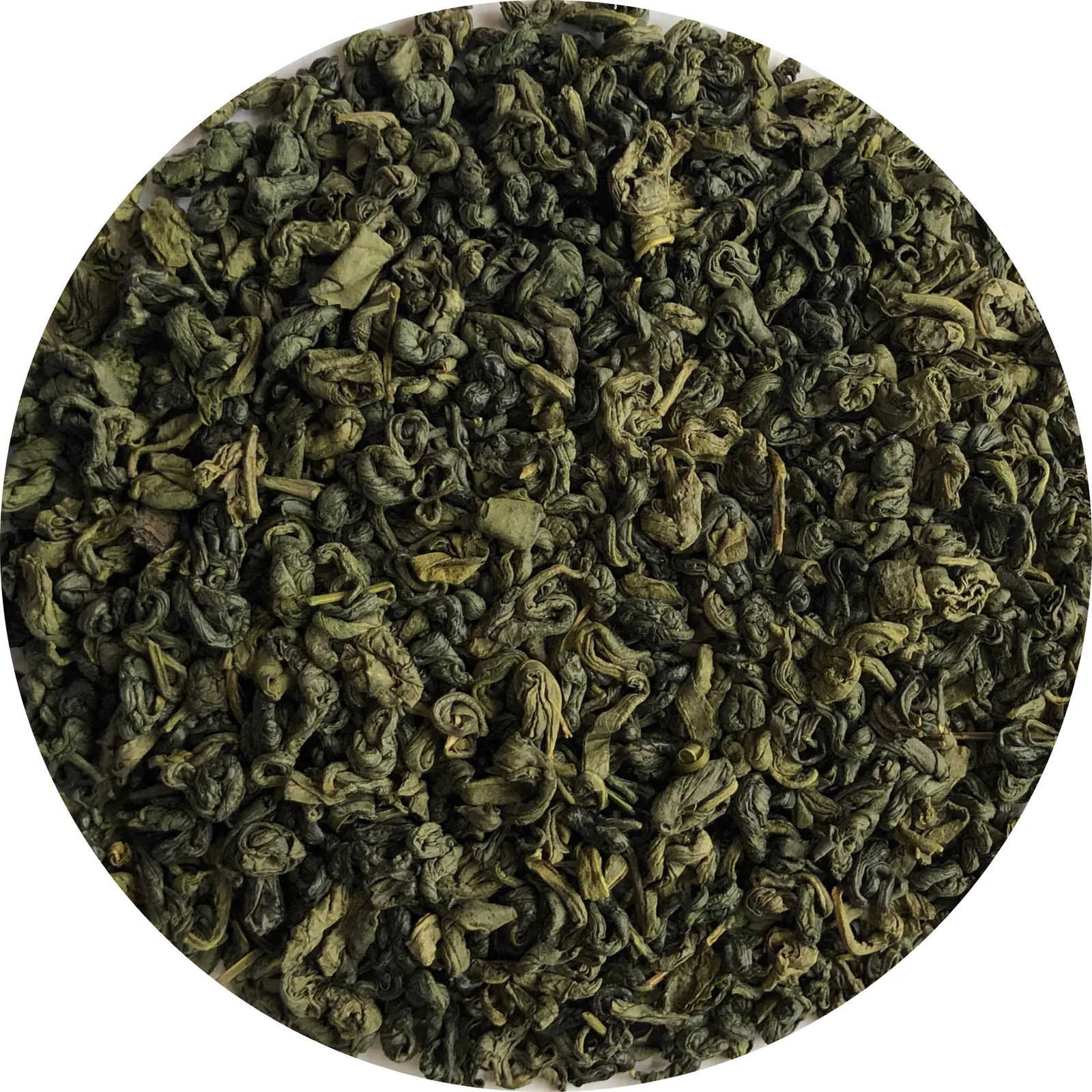
Broken grades: Broken, PS and BPS
- Broken Green Tea: small or broken pieces of leaf. It sits between the whole-leaf grades and fannings, brews quickly and gives a robust cup.
- PS Green Tea (Pekoe Souchong): medium-sized pieces with an orange-yellow liquor, commonly used in tea bags.
- BPS Green Tea (Broken Pekoe Souchong): flat leaf pieces of about 4–5 mm, yellow to dark green in color, with a rich taste. BPS is widely used in tea bags and for tea extract.
Broken grades suit buyers who need a stronger brew than whole leaf but still want leaf pieces you can see.
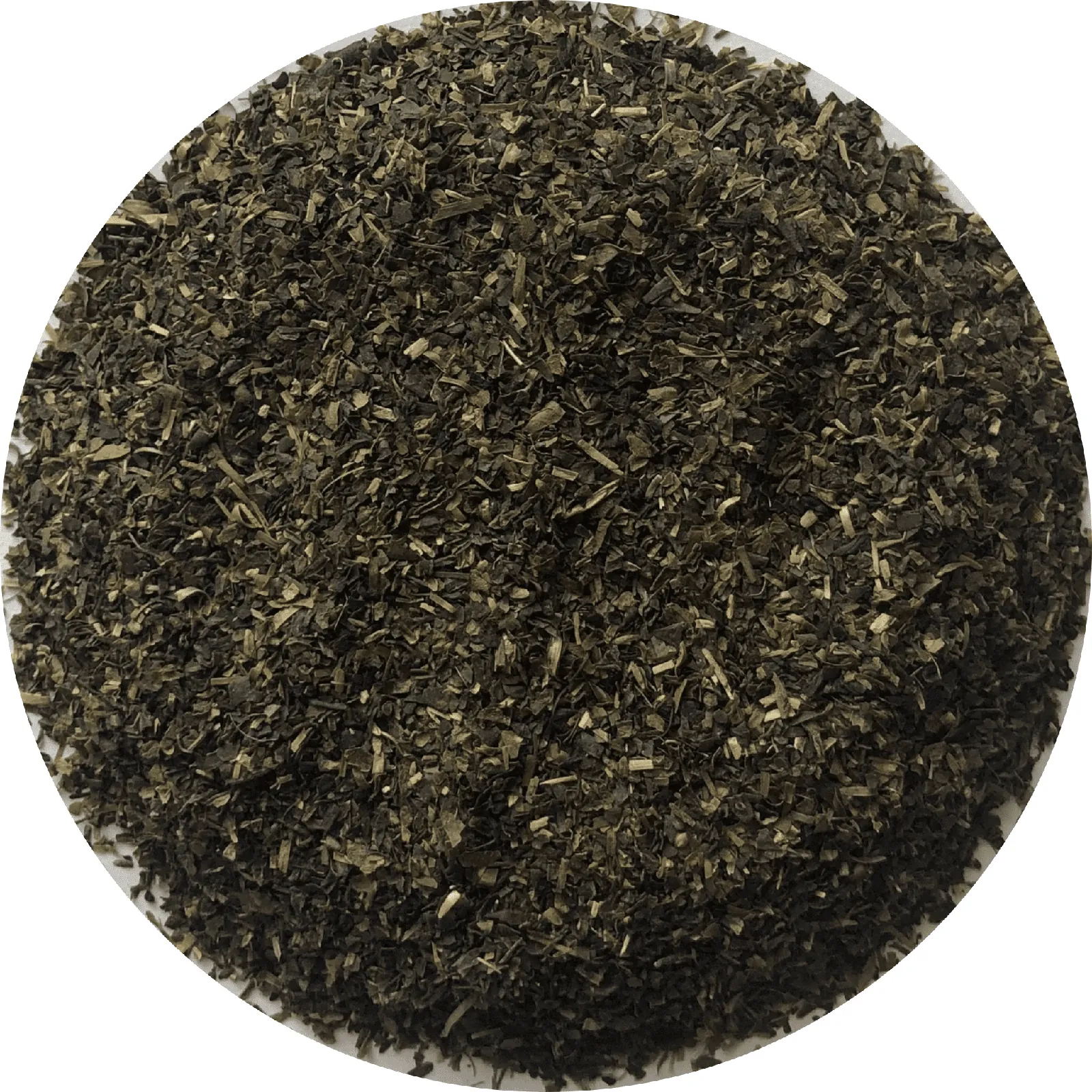
Fannings and dust
- Fanning Green Tea: small, finely broken particles. It brews very quickly with a strong, vegetal taste, and is the standard choice for tea bags and tea extract.
- Powder Dust Green Tea: a fine powder that brews a dark green liquor with a strong taste.
Fannings and dust are usually the most economical grades, and they are what most tea bag packers ask for.
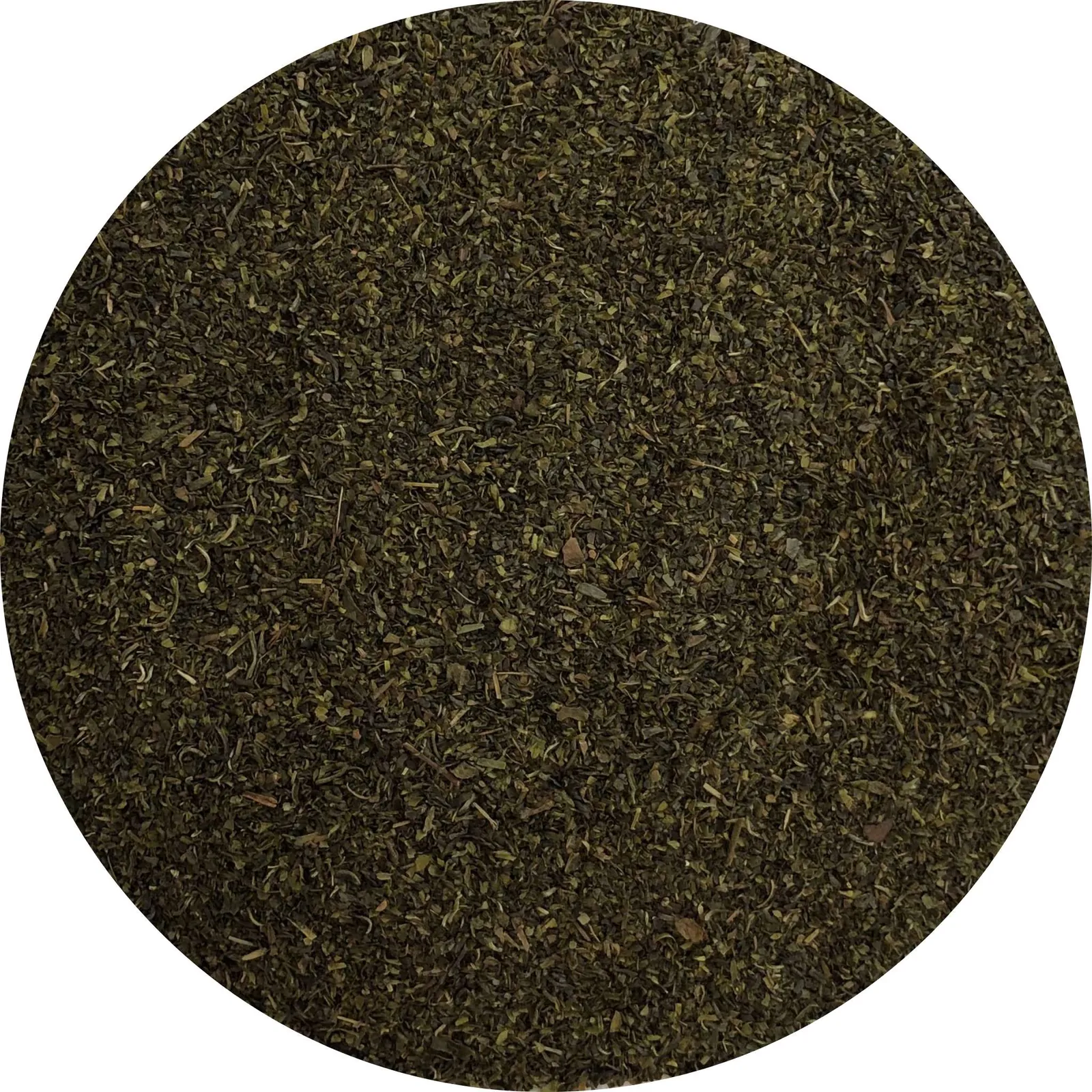
Stalk and specialty green tea
- Stalk Green Tea: tender stalks of 0.5–1 cm with a green-yellow liquor.
- Shan Snow Green Tea: a specialty tea from Ha Giang, made from wild tea trees growing above 1,000 meters. The leaves are fully curled and the liquor is light yellow, with a mellow taste, floral notes and a hint of nuttiness.
The grade also changes your freight cost
Small, dense grades put more tea into a container. With standard packing, a 40-foot high cube (40HC) container holds roughly:
- Dust: 28 tons
- Fanning: 26 tons
- Madina: 25 tons
- BPS: 23 tons
- Broken and PS: 22 tons
- Pekoe: 18 tons
- OP: 17 tons
- TH: 16 tons
- Stalk: 15 tons
- OPA and BOM: 14 tons
So freight per kilogram is clearly higher for large-leaf grades than for fannings or dust. These figures are for reference only; we confirm the exact quantity once we know your grade and packing.
How to choose the right grade
Start from your end product:
- Loose-leaf tea for retail: OP, OPA, Pekoe or Madina, where the look of the leaf is part of what your customer pays for.
- Tea bags: BPS, PS or fannings, which brew fast and fill the bag evenly.
- Flavored and scented blends: whole-leaf grades such as OP carry the flavor well; our Jasmine OP Green Tea is one example.
- Tea extract: BPS, fannings and dust.
Then ask for samples of two or three neighboring grades and brew them side by side with the same water, temperature and time. Compare the color of the liquor, the aroma and the strength. The sample you approve becomes the standard for your order.
Packing for export
Green tea for export is usually packed in PP/PE bags, kraft paper sacks, export cartons, or vacuum aluminum bags inside cartons. We can also pack under your own brand: custom-printed bulk bags, private-label tea bags and retail packs. See our packing and loading options.
Request samples and a quotation
Tell us which grades you are considering, the quantity and your destination port, and we will reply with samples and a quotation. Contact us, or browse all our green tea grades.