AR
AR RU
RU ZH
ZH UZ
UZ HI
HI UR
UR FA
FA FR
FR VI
VI
Vietnam Flavored Tea: Jasmine and Earl Grey Buying Guide
Vietnam flavored tea is plain Vietnamese tea with one thing added: a scent. Our two flavored tea families are jasmine green tea, scented with fresh jasmine blossoms, and Earl Grey black tea, flavored with bergamot. On request we flavor the same base teas with cardamom, chai spices, ginger, cinnamon, mint, lotus and fruit flavors. All of them start from the leaf grades we sell plain, so the quality, the price and the tons per container follow the base tea, and the scent is a second decision on top. This guide explains how jasmine tea and Earl Grey are made at our factories, how our four flavored tea grades differ, which other flavored teas we make to order, what to check on a sample and a specification sheet, how flavoring affects the label in your market, and how to buy flavored tea from Vietnam in bulk.
What flavored tea is
Flavored tea is tea that has been given an aroma it does not have on its own. The tea trade uses two words for two different methods:
- Scented tea takes its aroma from fresh flowers that are mixed with the tea and later removed. Jasmine green tea is the classic example. Nothing is sprayed on; the leaf absorbs the scent from the blossoms.
- Flavored tea takes its aroma from a flavoring that is added to the finished tea, usually an essential oil or a flavoring preparation. Earl Grey, which is black tea with bergamot, is the best-known example.
On our website both families sit in one flavored tea category, because buyers compare them the same way: by the base grade, by the strength of the aroma and by the price per kilogram.
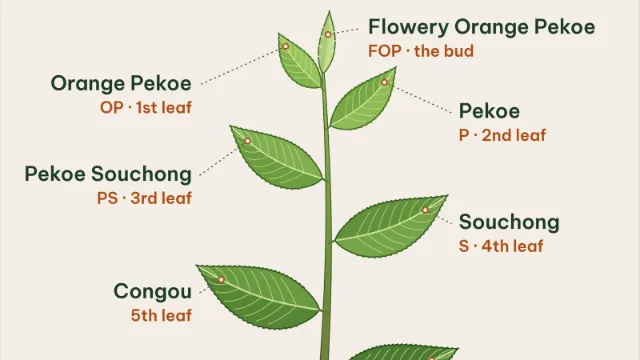
A point that matters for buying: the base tea decides most of the price. Jasmine on a whole-leaf OP grade costs more than jasmine on a flaky TH grade, and Earl Grey on OP or Pekoe costs more than Earl Grey on stalk, TH, PS or OPA. If you know which plain grade suits your product, you already know which flavored grade to sample. Our guide to tea leaf grades explains the grade names.
How our jasmine green tea is made

Jasmine tea has a long history in Vietnam, where it is known as trà nhài or trà lài and is brewed daily in homes and tea shops. The flower is Jasminum sambac, the small white jasmine that blooms in summer. The method we use is the traditional one:
- Base tea. Green tea from our gardens in Phu Tho, Yen Bai, Thai Nguyen and the other northern provinces is processed at our factories in Phu Tho and Yen Bai and sorted into grades. For jasmine we use the OP grade, a whole, slightly curled leaf, and the TH grade, a medium flaky leaf.
- Fresh blossoms. Jasmine buds are picked during the day, while they are still closed, and kept until the evening, when they open and release their scent.
- Scenting. The tea and the open blossoms are spread in alternating layers and left overnight. The dry leaf takes in the moisture and the aroma of the flowers.
- Separating and drying. The next day the spent flowers are sifted out and the tea is dried again to bring the moisture back down. Some dried flowers are left in the tea, which is why you see white petals in the finished product.
- Repeat. The cycle is repeated with fresh flowers. More rounds give a deeper, longer-lasting scent. The finest Chinese jasmine teas from Fuzhou are scented up to nine times; export grades are scented fewer times and priced accordingly.
The result is a green tea with a bright yellow liquor, a clearly floral jasmine aroma and an intense jasmine taste that survives milk, sugar and ice, which is why jasmine green tea is a standard base for jasmine milk tea and bubble tea.
How our Earl Grey black tea is made
Earl Grey is black tea flavored with bergamot. Bergamot is a citrus fruit, Citrus bergamia, and almost all of the world's bergamot oil comes from a narrow strip of coast in Calabria, southern Italy. The oil is pressed from the peel and gives Earl Grey its recognizable citrus-floral aroma.
At our factories the process is short:
- Base tea. Black tea is withered, rolled, oxidized, dried and sorted into grades in the same way as our plain Vietnam orthodox black tea.
- Flavoring. The bergamot flavoring is added to the sorted, dried tea and blended until every part of the batch carries the same aroma.
- Resting and packing. The flavored tea rests so that the aroma spreads evenly through the leaf, and is then packed in bags that hold the scent in.
Because the flavoring is added at the factory, you receive a finished Earl Grey and do not need to buy bergamot or blend it yourself. The strength of the bergamot is agreed on the sample: some markets want a light citrus note, others want the bergamot to lead.
Vietnam flavored tea grades we supply
Our flavored tea category has four grades: two jasmine green teas and two Earl Grey black teas. The table shows how they differ.
| Product | Base tea | Dry leaf | Liquor | Best for |
|---|---|---|---|---|
| Jasmine OP Green Tea | OP green tea (whole leaf) | Slightly curled whole leaves with dried jasmine flowers | Bright yellow | Loose-leaf retail packs, tins, premium jasmine tea bags |
| Jasmine TH Green Tea | TH green tea (medium flaky leaf) | Medium flakes with dried jasmine flowers | Yellow | Jasmine tea bags, jasmine milk tea, economy loose tea, blends |
| High Quality Earl Grey Black Tea | OP, FBOP, P, Pekoe black tea | Slightly curled, even black leaf | Golden red with an orange tint | Whole-leaf Earl Grey retail packs, premium tea bags |
| Cheap Earl Grey Black Tea | Stalk, TH, PS, OPA black tea | Stalks, broken or whole black leaf by base grade | Golden red with an orange tint | Economy Earl Grey tea bags, value blends, private label |
Both jasmine grades have the same scenting and the same intense jasmine taste; the difference is the leaf. Both Earl Grey grades have the same bergamot aroma and the same bold, malty taste with a smooth citrus finish; again, the difference is the leaf. If your customers see the leaf, choose OP or the high quality Earl Grey. If the tea goes into a bag or a blend, the TH jasmine and the value Earl Grey give the same cup at a lower cost.

Other flavored teas on request: cardamom, chai spices, ginger, mint, lotus and fruit
Jasmine and Earl Grey are the two flavored teas we keep as standard grades. The same factories flavor the same base teas with other spices, flowers and fruit flavors to order. The most common requests:
- Cardamom tea. Black tea with cardamom is the daily tea of the Gulf, Iraq and much of South Asia, brewed strong with milk and sugar as karak or chai. The base is usually a CTC grade such as PD or PF, or an orthodox dust grade such as BPS or PS, so that the tea stands up to boiling with milk. Cardamom can be added as ground seed, as crushed pods or as a cardamom flavoring, and the dose is agreed on the sample. See our tea dust grades for the base teas that go with it.
- Bergamot tea beyond Earl Grey. Bergamot also goes on green tea, and Lady Grey style blends add orange and lemon peel to the bergamot. If your market knows "bergamot tea" rather than "Earl Grey", the product is the same base tea and bergamot in a different proportion.
- Chai spice blends. Cardamom, ginger, cinnamon, clove and black pepper blended into CTC black tea for ready-to-brew masala chai. You choose the spice ratio; we blend it into the tea so that every bag carries the same mix.
- Ginger tea and cinnamon tea. Black tea with dried ginger or cinnamon, popular in the Middle East, Central Asia and in winter blends in Europe. Both are made on broken or dust grades for a strong cup.
- Mint tea. Green tea with dried spearmint or peppermint, for North Africa, the Middle East and iced tea blends. The base is a green tea grade such as Pekoe, OP or OPA; Moroccan-style buyers often prefer a plain green tea and add fresh mint themselves, so tell us which you need.
- Lotus tea. Green tea scented with lotus is the most Vietnamese of all scented teas, traditionally made with the stamens of lotus flowers picked in summer. Lotus is seasonal and the lots are small, so lead time and quantity are confirmed per order.
- Fruit and flower flavors. Peach, lychee, passion fruit, lemon, mango, rose and osmanthus on green or black tea, mainly for bubble tea shops, iced tea and flavored tea bags. These use flavorings rather than fresh fruit, and the label rules in the next sections apply.
For any of these, start from the plain grade that suits your product and tell us the flavor, the target strength and the market. We send a flavored sample with the specification, and the minimum quantity depends on the base grade and the flavoring.
How to read a flavored tea specification
A flavored tea specification has the same four lines as a plain tea, liquor, appearance, aroma and flavor, plus a few points that only matter when a scent is involved. Agree these on the sample before you order:
- Base grade. Ask which plain grade the tea was made from. It tells you the leaf size, the price band and the tons per container.
- Scent strength. For jasmine, the number of scenting rounds; for Earl Grey, the dose of bergamot. Brew the sample the way your customers drink it and compare it with your current supply.
- Type of flavoring. For Earl Grey, whether the bergamot is an essential oil, a natural flavoring or another flavoring preparation. This decides what you may print on the label (see the next section).
- Dried flowers. For jasmine, how much dried blossom remains in the tea. Some buyers want visible petals; tea bag packers often want them sifted out.
- Moisture. Scenting adds moisture and the tea is dried again afterwards. Moisture on the specification tells you how well it will keep.
- Particle size. For tea bags, so the tea flows in your packing machine and does not leak through the paper.
The approved sample becomes the standard for the order, and every shipment is the same as or better than it.
Flavoring and the label in your market
Because a flavored tea contains something besides tea, the ingredient list on the retail pack has to say so, and the rules on the word "natural" differ by market. Two examples that come up most often:
- European Union. Under Regulation (EC) No 1334/2008 on flavourings, a flavouring may be called "natural" only if its flavouring component consists solely of natural flavouring substances and/or flavouring preparations, and a flavouring named after a source, such as "natural bergamot flavouring", has to come overwhelmingly from that source. Earl Grey packs in the EU therefore list "bergamot oil", "natural bergamot flavouring" or simply "flavouring", depending on what was used.
- United States. The FDA defines "natural flavor" in 21 CFR 101.22 as a flavoring derived from a spice, fruit, vegetable, plant material and similar natural sources, and requires flavors to be declared as "natural flavor" or "artificial flavor" in the ingredient statement.
Jasmine tea scented with real blossoms is simpler: the ingredients are green tea and jasmine flowers. For Earl Grey, tell us the market and we will state on the specification exactly what flavoring was used, so that your label matches it. The specification is a technical document; your own labeling adviser confirms the wording for your country.
Which flavored tea grade for which product
- Loose-leaf jasmine tea in retail packs and tins: Jasmine OP, because the whole leaf and the petals look right in a clear pack.
- Jasmine tea bags: Jasmine TH as the standard choice; Jasmine OP for a premium pyramid bag.
- Jasmine milk tea and bubble tea: Jasmine TH, brewed strong. Its intense jasmine taste holds up against milk, sugar and ice. Our guide to Vietnamese tea for bubble tea covers the plain grades that go with it.
- Whole-leaf Earl Grey for retail: High Quality Earl Grey on OP, FBOP or Pekoe.
- Earl Grey tea bags and value blends: Cheap Earl Grey on stalk, TH, PS or OPA, where cost per cup matters more than leaf appearance.
- Cardamom tea and karak for the Gulf and South Asia: CTC PD or PF, or orthodox BPS or PS, flavored with cardamom; the same base grades for chai spice blends.
- Mint tea for North Africa and the Middle East: a green tea grade such as Pekoe or OP with dried mint, or the plain grade if your customers add fresh mint.
- Blending: either Earl Grey grade as the citrus component in a breakfast or afternoon blend; Jasmine TH to add a floral note to a green tea blend; ginger or cinnamon black tea for winter blends.
Ask for the two grades in one family, for example Jasmine OP and Jasmine TH, and brew them side by side with the same water, temperature and time. The scent is the same; the body and the look of the leaf are what you are choosing between.
Container loading per grade
Flavoring does not change the density of the tea, so the tons per container follow the base grade. With standard bulk packing, a 40-foot high cube (40HC) container holds roughly:
| Flavored tea | Base grade | Tons / 40HC |
|---|---|---|
| Jasmine OP Green Tea | OP green | 17 |
| High Quality Earl Grey | OP, Pekoe black | 16–17 |
| Cheap Earl Grey | OPA black | 13 |
| Cheap Earl Grey | PS black | 18 |
| Jasmine TH Green Tea, Cheap Earl Grey on TH or stalk | TH, stalk | confirmed per order |
The figures are for reference only; we confirm the exact quantity once we know your grade and packing. The full table for every category is on our packing and loading page.
Packing flavored tea for export
Aroma is what you are paying for, so packing has to keep it in and keep foreign smells out. Flavored tea for bulk export is normally packed in:
- Vacuum aluminum bags inside export cartons, the best option for Earl Grey and jasmine because the foil holds the scent and keeps the tea dry.
- PP/PE bags, woven polypropylene with a polyethylene inner liner, the standard bulk packing where the tea will be repacked soon after arrival.
- Kraft paper sacks with an inner liner, stacked on pallets.
Keep flavored tea away from plain tea and from anything with a strong smell during storage and loading; tea absorbs aromas as readily as it gives them off. We also pack under your own brand: private-label tea bags, printed boxes, zip pouches, aluminum bags and tins. Tell us the pack size and the design and we will quote the packing together with the tea.
Where Vietnam flavored tea is sold
Goo Farm Tea Vietnam produces up to 7,000 tons of tea a year across all categories and has exported to more than 30 countries. Jasmine green tea goes mainly to tea bag packers, milk tea and bubble tea chains and distributors in Asia and the Middle East; Earl Grey goes to blenders, tea bag packers and private-label importers in Europe, the CIS and the Middle East; cardamom and chai spice teas go to the Gulf, Iraq and South Asia; mint tea to North Africa. Each market wants a different scent strength, so tell us how your customers drink it and we will suggest the grades to sample.
Frequently asked questions
Is your jasmine tea scented with real flowers or with flavoring? With fresh jasmine blossoms, in the traditional way: the tea and the flowers are layered overnight, the spent flowers are removed and the tea is dried again. Dried flowers remain in the finished tea.
What is the difference between Jasmine OP and Jasmine TH? The leaf. OP is a whole, slightly curled green leaf for loose tea and premium packs; TH is a medium flaky leaf that costs less and suits tea bags and milk tea. The jasmine scent is the same.
Which black tea is your Earl Grey made from? The high quality grade uses OP, FBOP, P and Pekoe leaf; the value grade uses stalk, TH, PS and OPA. Both are flavored with bergamot at our factory.
Can you adjust the strength of the bergamot? Yes. The dose is agreed on the sample, from a light citrus note to a bergamot-forward cup.
Do you make cardamom tea, chai spice tea or mint tea? Yes, to order. Cardamom and chai spice blends go on CTC or dust black tea grades for karak and masala chai; mint goes on green tea grades. Ginger, cinnamon, lotus and fruit flavors are also available. Tell us the flavor, the strength and the market and we send a flavored sample.
Is bergamot tea the same as Earl Grey? Yes. Earl Grey is black tea flavored with bergamot. We can also put bergamot on green tea, or add orange and lemon peel for a Lady Grey style blend.
Can you pack flavored tea under my brand? Yes: private-label tea bags, printed boxes, zip pouches, aluminum bags and tins, as well as custom-printed bulk bags. See packing and loading.
How many tons of flavored tea fit in a container? The same as the base grade: about 17 tons of OP, 16 tons of Pekoe, 18 tons of PS and 13 tons of OPA per 40HC. TH and stalk are confirmed per order.
Do you supply samples? Yes. Tell us the grades you are considering and the market the tea is for, and we will send samples with a specification sheet that states the base grade and the flavoring used.
Request samples and a quotation
Tell us which flavored tea grades you are considering, the quantity, the packing and your destination, and we will reply with samples and a quotation. Contact us, or browse our flavored tea grades.