 AR
AR RU
RU ZH
ZH UZ
UZ HI
HI UR
UR FA
FA FR
FR VI
VI
Vietnam Tea Dust: Black Tea Dust Grades and Buying Guide
Vietnam tea dust is the smallest, strongest and most economical form of black tea we sell — and, by volume, one of the most important. Tea dust and fannings are what goes into most tea bags, what milk tea and bubble tea shops brew by the litre, and what tea extract plants feed into their lines. Because the particles are small and dense, tea dust brews fast and dark, gives full color with milk and sugar, and packs more tea into a container than any leaf grade. This guide explains what tea dust is, how our eleven tea dust grades differ, how to read a tea dust specification, which grade suits tea bags, milk tea or extract, and how to buy Vietnam tea dust in bulk.
What tea dust is
When black tea is dried and sorted, it is passed over a series of sieves. The large leaf becomes the whole-leaf and broken grades; what passes through the finer sieves is sorted again into fannings — small, finely broken pieces — and dust, the finest fraction, a powder-like tea of tiny particles. Despite the name, dust is not sweepings: it is sorted, cleaned, graded tea with the same origin as the leaf grades, and in many markets it is the preferred form.
Tea dust is made from both kinds of black tea:
- Orthodox tea dust comes from rolled leaf — our BPS, PS, F and Dust grades — and keeps the golden-reddish liquor and malty, brisk, citrus notes of Vietnam orthodox black tea.
- CTC tea dust comes from cut, torn and curled leaf — our PF and PD grades — with the ruby-red liquor and strong, malty taste of Vietnam CTC black tea.
In Southeast Asia tea dust is also known as powder black tea, granules black tea, D1 black tea, teh tarik tea dust, bubuk teh hitam or serbuk teh — different names for the same family of grades.
How Vietnam tea dust is made
Tea dust is not a separate process; it is a product of sorting. Fresh leaf from our tea gardens in Phu Tho, Yen Bai, Ha Giang, Moc Chau, Lai Chau, Lao Cai, Thai Nguyen and Nghe An is processed into black tea at our factories in Phu Tho and Yen Bai — withered, rolled or CTC-cut, oxidized and dried. The Yen Bai factory is certified to ISO 22000:2018 for the manufacturing and trading of dried tea.
After drying, the tea is sorted on sieves of decreasing mesh. Each fraction is cleaned of fiber and stalk and graded by particle size and appearance. The grades below are the results of that sorting, from the largest particle to the finest powder. Every order we ship is the same as or better than the sample you approved.
Vietnam tea dust grades we supply
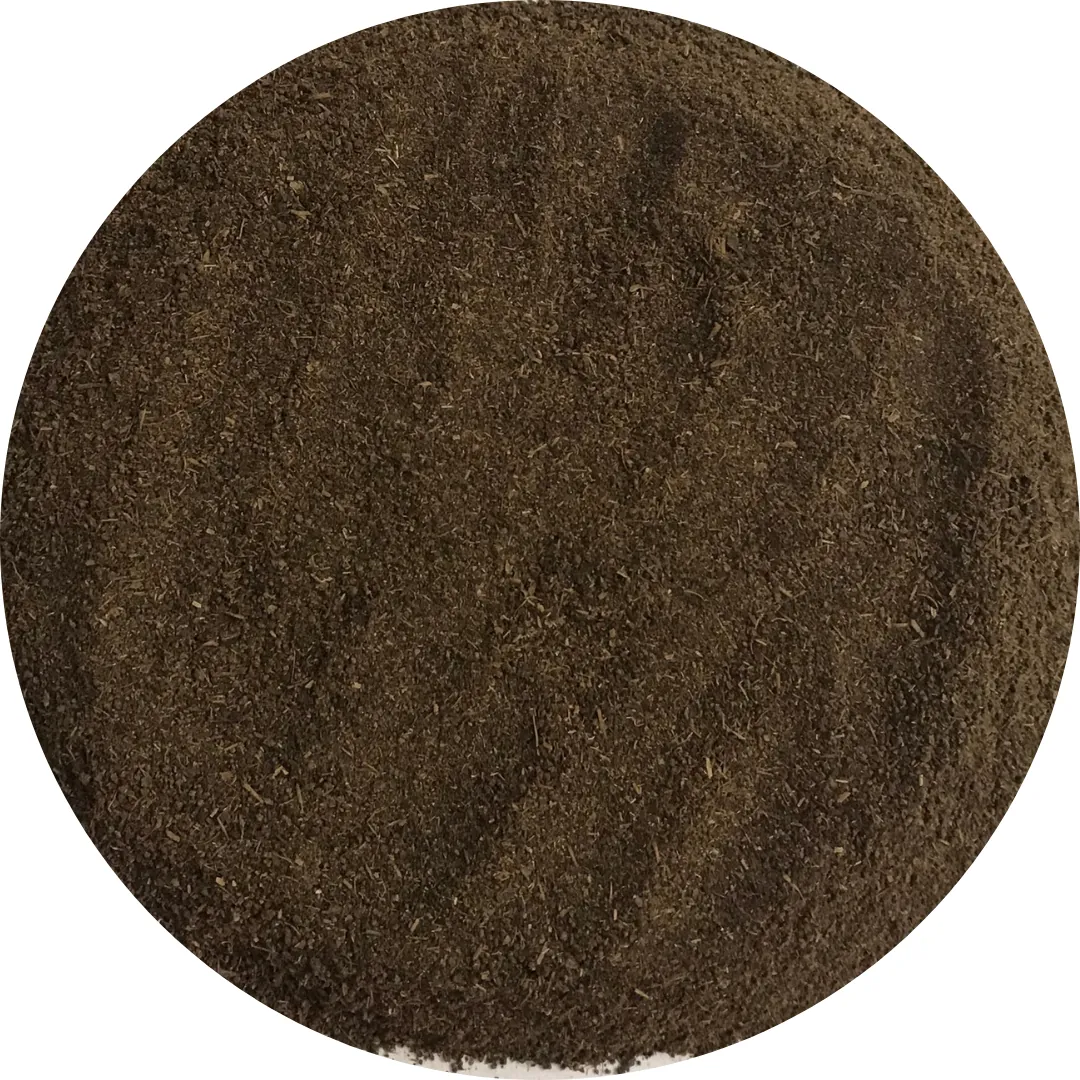
Our tea dust category has eleven grades. They differ in particle size, in whether they come from orthodox or CTC processing, and in price point.
Broken grades for tea bags: BPS2, BPS3, PS2 and PS3
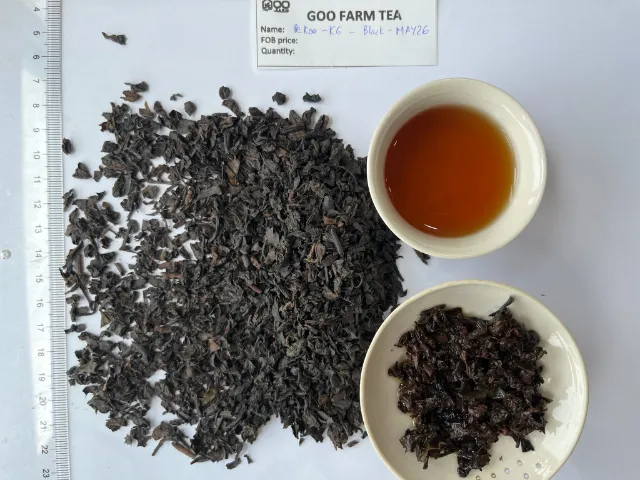
- Tea Dust Black Tea BPS2 and BPS3 (Broken Pekoe Souchong): flaky leaves with a neat appearance, smaller than PS, with a golden-reddish liquor and a malty, brisk taste with citrus notes and a sweet, lightly tannic finish. BPS2 is the standard grade, BPS3 the more economical one.
- Tea Dust Black Tea PS2 and PS3 (Pekoe Souchong): a smooth, bold cup at a competitive price, used by wholesalers for blending, tea bags, bubble tea, milk tea and tea extract.
These are the largest particles in the tea dust range — visible leaf pieces rather than powder — and suit buyers who want a strong tea bag with some leaf character.
Fannings: F1, F2 and F3
- Tea Dust Black Tea F1: finely broken small pieces with brown-yellow particles and a reddish liquor with an orange tint. The first fannings grade, used for tea bags, bubble tea, tea extract and milk tea.
- Tea Dust Black Tea F2: the same small cut, giving a quick and brisk infusion, at a lower price.
- Tea Dust Black Tea F3: the most economical fannings grade, with the same quick, brisk brew.
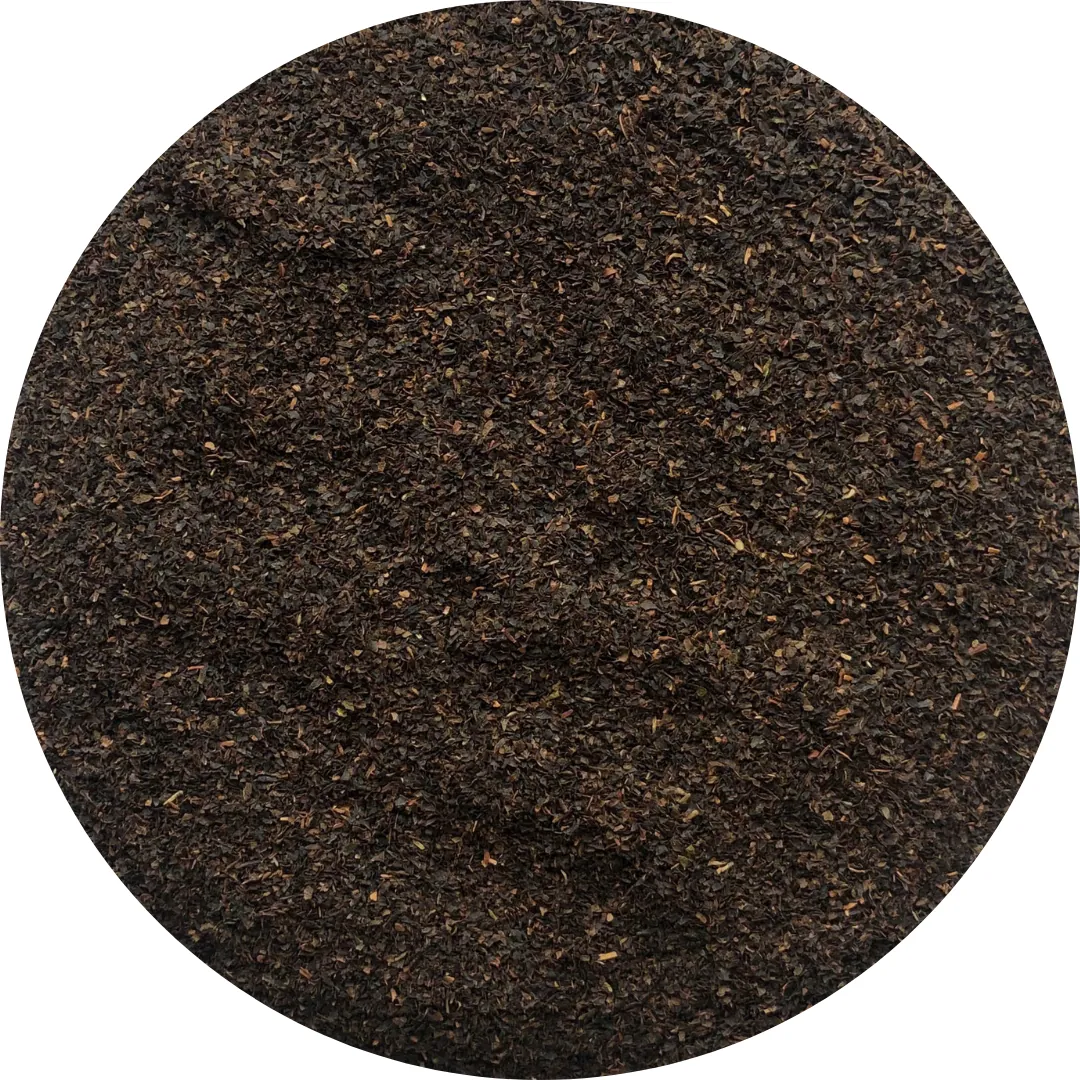
Dust: Grade 1 and Grade 2
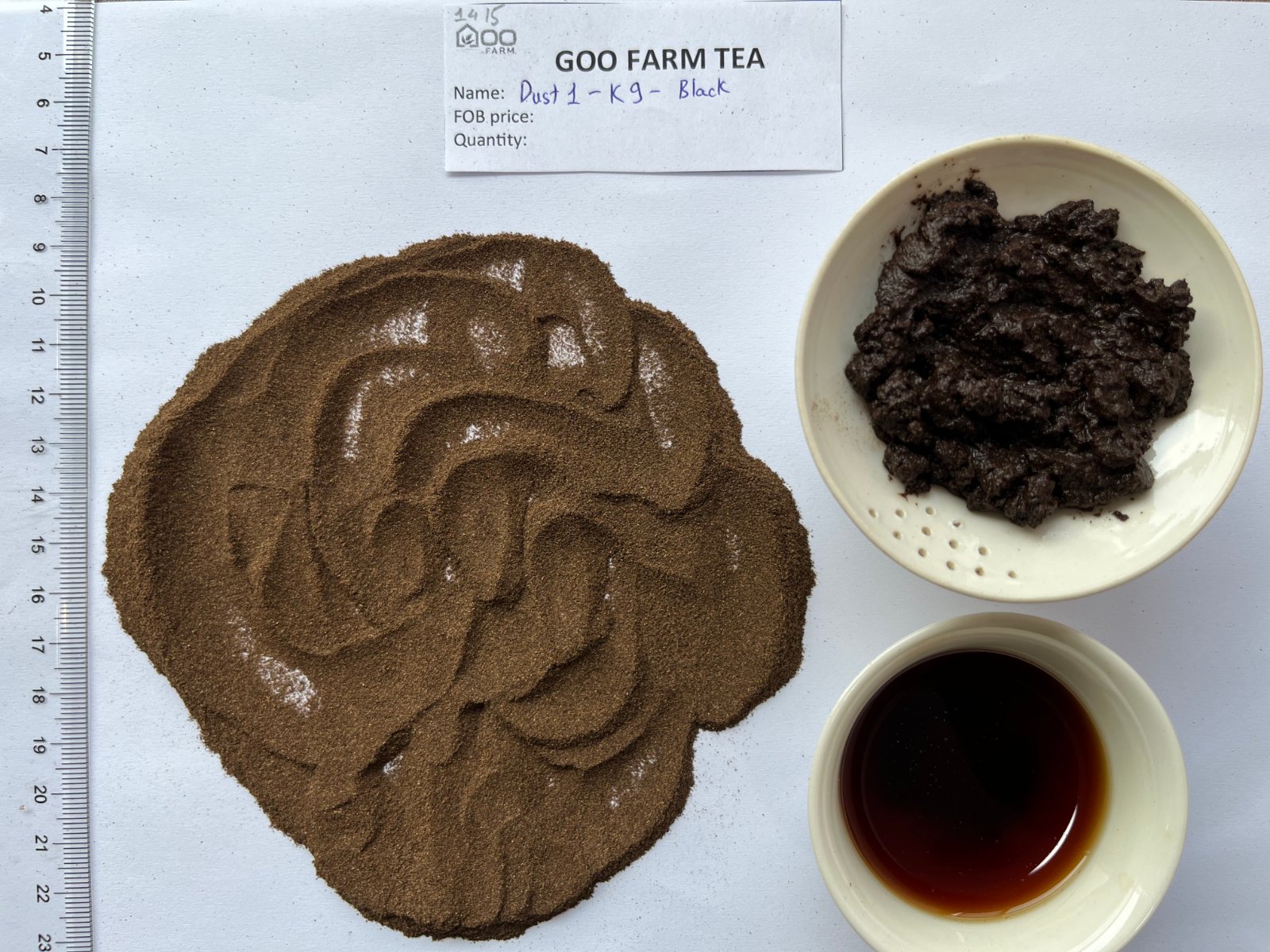
- Tea Dust Black Tea Grade 1 (Dust 1): fine blackish powder with a reddish liquor and a rich, full-bodied cup. This is the grade sold as powder black tea or teh tarik dust in Southeast Asia, and it is widely used in milk tea, bubble tea and boba milk tea.
- Tea Dust Grade 2 (off-grade Dust 2 and Dust 3): brown-yellow fine powder from orthodox processing at a low wholesale price, for blending, tea bags, boba tea and milk tea.
CTC tea dust: PF and PD
- Tea Dust Black Tea PF (Pekoe Fannings, CTC): small, firm granules, black to dark brown, with a ruby-red liquor and a strong, malty taste. The usual base for strong tea bags and breakfast-style blends.
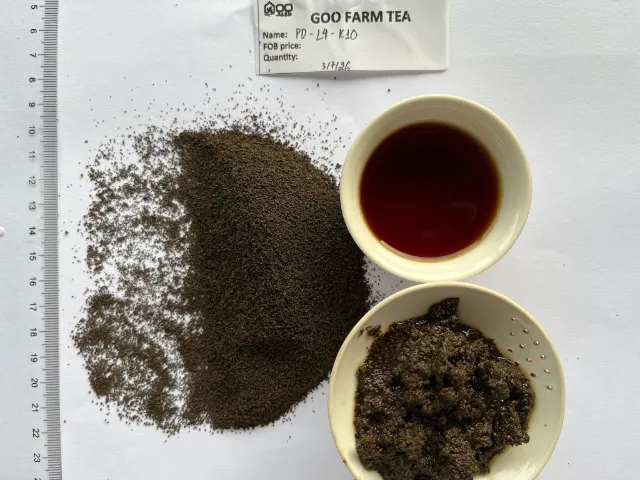
- Tea Dust Black Tea PD (Pekoe Dust, CTC): the finest CTC grade, small and firm, brewing fastest and darkest. Used plain or with milk and sugar, and for spiced tea and boba tea.
How to read a tea dust specification
For each grade you will see four lines — liquor, appearance, aroma and flavor — and the differences between grades show up mainly in the first two:
- Liquor: golden reddish with an orange tint for the orthodox broken grades (BPS, PS); reddish with an orange tint for fannings and dust; ruby red for the CTC grades (PF, PD).
- Appearance: flaky leaf pieces (BPS, PS), finely broken pieces with brown-yellow particles (F1–F3), fine blackish powder (Grade 1), brown-yellow fine powder (Grade 2), small firm granules (PF, PD).
- Aroma: invigorating with hints of floral notes for the orthodox grades; invigorating and fresh for CTC.
- Flavor: malty, brisk and citrus with a sweet, lightly tannic aftertaste for orthodox; strong and malty for CTC.
For tea bag and extract buyers, two more figures matter and should be agreed on the sample: the particle size range, which decides how the tea flows in your packing machine and whether it leaks through the bag paper, and the moisture content, which decides shelf life. Ask for both on the specification sheet, brew the sample the way your customers drink it — with milk and sugar for teh tarik or chai, plain for a tea bag, concentrated for extract — and compare it with your current supply. The approved sample becomes the standard for the order.
Which tea dust grade for which product
- Standard tea bags: F1, PF or PD for fast, full color; BPS2 or PS2 where you want visible leaf in the bag.
- Economy tea bags: F2, F3, BPS3, PS3 or Grade 2.
- Milk tea, bubble tea and boba: Grade 1 dust, PD or F1 — fine particles extract quickly and stand up to milk, sugar and ice.
- Teh tarik and spiced tea: Grade 1 dust or PD, brewed strong.
- Tea extract and instant tea: Grade 1, Grade 2, F-grades and PD, where extraction yield matters more than appearance.
- Blending: PS2, PS3 and BPS grades to add strength and color to a leaf blend.
Ask for two neighboring grades — for example F1 and Grade 1, or PF and PD — and brew them side by side with the same water, temperature and time. The difference in particle size shows directly in the speed and depth of the color.
Container loading per grade
Tea dust is the densest tea we ship, so it is also the cheapest per kilogram to move. With standard packing, a 40-foot high cube (40HC) container holds roughly:
- Dust: 28 tons
- Fanning and PD: 26 tons
- PF: 25 tons
- BPS: 22 tons
- PS: 18 tons
Compare that with 13–17 tons for large-leaf orthodox grades. These figures are for reference only; we confirm the exact quantity once we know your grade and packing. See the full table on our packing and loading page.
Packing Vietnam tea dust for export
Because the particles are fine, packing has to keep the tea dry and keep it from sifting out. Tea dust for bulk export is normally packed in:
- PP/PE bags — woven polypropylene bags with a polyethylene inner liner, the standard packing for dust and fannings.
- Kraft paper sacks, stacked on pallets for container loading.
- Export cartons with an inner liner.
- Vacuum aluminum bags inside export cartons, for buyers who want the longest shelf life.
We also pack under your own brand: custom-printed bulk bags, private-label tea bags and retail packs such as printed boxes, zip pouches, aluminum bags and tins — including small retail packs of powder black tea for the teh tarik and milk tea trade. Tell us the pack size and the design and we will quote the packing together with the tea.
Where Vietnam tea dust is sold
Goo Farm Tea Vietnam produces up to 6,500 tons of tea a year across all categories and has exported tea to more than 30 countries. Tea dust and fannings go mainly to tea bag packers, milk tea and bubble tea chains, extract plants and blenders in:
- Southeast Asia: Indonesia, Malaysia, Thailand and Singapore, where powder black tea for teh tarik, milk tea and bubble tea is a staple.
- Middle East and South Asia: Iraq, Turkey, Pakistan, Afghanistan, the UAE and Saudi Arabia.
- CIS: Russia, Belarus, Ukraine, Azerbaijan, Kazakhstan, Kyrgyzstan, Tajikistan, Turkmenistan and Uzbekistan.
- Africa and others: Nigeria, Chad, Egypt and Trinidad.
Each market brews differently, so tell us how your customers drink it and we will suggest the grades to sample.
Frequently asked questions
Is tea dust low-quality tea? No. It is the finest sorted fraction of the same black tea as the leaf grades, chosen for speed, strength and color rather than leaf appearance. A good Grade 1 dust gives a clean, bright, strong cup.
What is the difference between fannings and dust? Particle size. Fannings (F1, F2, F3) are small broken pieces; dust (Grade 1, Grade 2) is a fine powder. Dust brews fastest and darkest and loads the most tons per container.
Which tea dust is best for milk tea and bubble tea? Grade 1 dust, PD or F1. They extract quickly, give deep color and stand up to milk, sugar and ice.
What is the difference between PF and F1? Processing. PF is a CTC grade with small, firm granules and a ruby-red, strong, malty cup; F1 is an orthodox fannings grade with finely broken pieces and a reddish, brisk, citrusy cup.
Can you pack tea dust under my brand? Yes — private-label tea bags, custom-printed bulk bags and retail packs. See packing and loading.
Do you supply samples? Yes. Tell us the grades you are considering and we will send samples with a specification sheet.
Request samples and a quotation
Tell us which tea dust grades you are considering, the quantity, the packing and your destination, and we will reply with samples and a quotation. Contact us, or browse all our tea dust grades.