 AR
AR RU
RU ZH
ZH UZ
UZ HI
HI UR
UR FA
FA FR
FR VI
VI
Vietnam Orthodox Black Tea: Grades, Process and Buying Guide
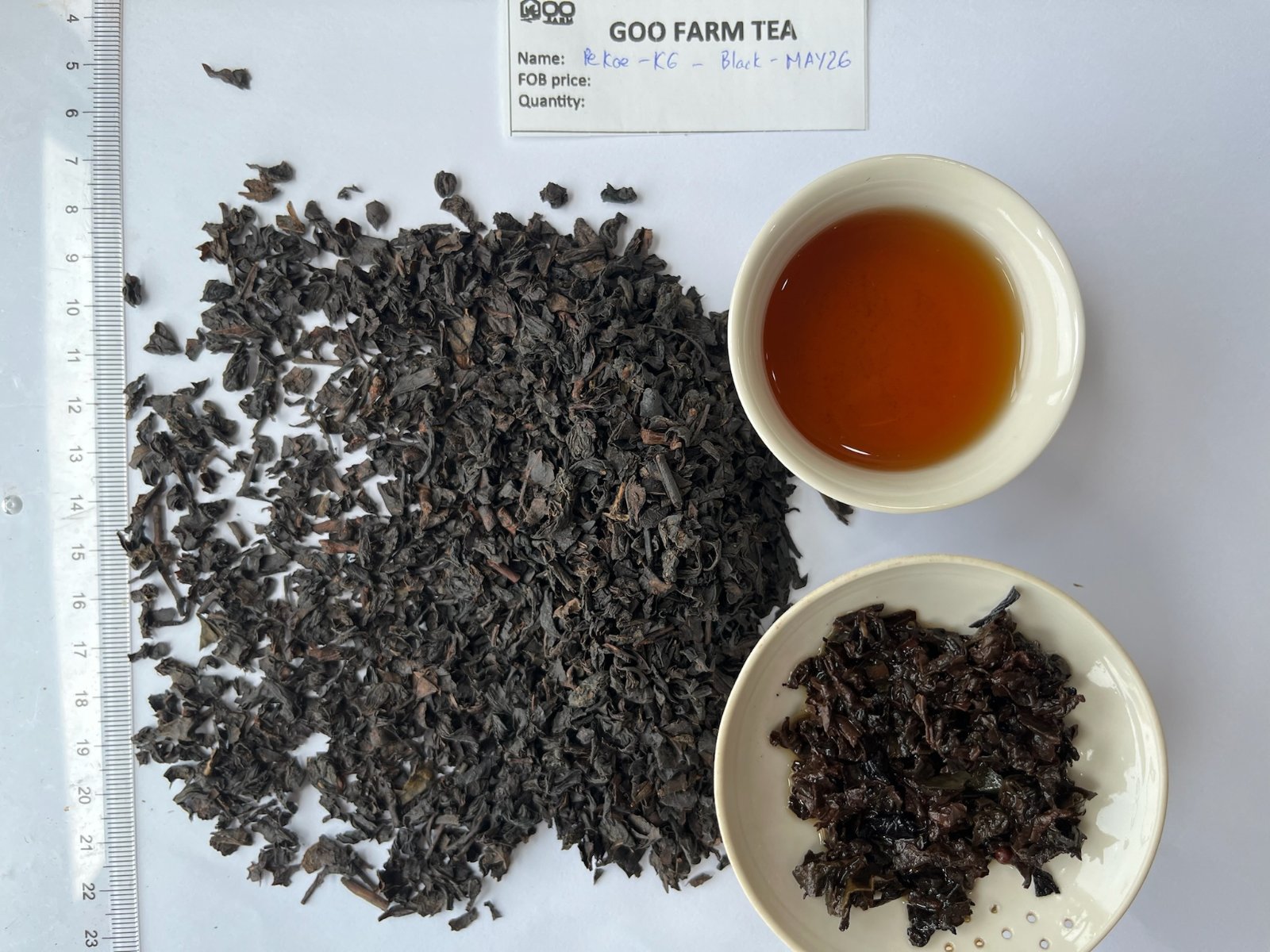
Vietnam orthodox black tea is the black tea most buyers picture when they think of leaf tea: long or broken leaf, rolled rather than cut, with a golden-red liquor and a malty, brisk taste with citrus and floral notes. It is the tea we have produced the longest at Goo Farm, and it is still the category with the most grades in our range — twelve, from large-leaf OPA and OP down to fannings and dust. This guide explains how orthodox black tea is made in Vietnam, what each grade looks like in the leaf and in the cup, how many tons of each grade fit in a container, and how to choose and buy the right grade for loose tea, tea bags or blends.
Orthodox and CTC: two ways to make black tea
Both are fully oxidized black teas. The difference is the rolling step.
- Orthodox black tea is rolled in a way that keeps the leaf whole or in recognisable pieces. The leaf twists and curls, the oxidation is slower and more layered, and the cup has more aroma and nuance. The look of the leaf is part of what you sell.
- CTC black tea is cut, torn and curled into dense granules for a fast, strong, uniform brew. It is the standard for tea bags and milk tea. See our guide to Vietnam CTC black tea.
Orthodox is the choice when you sell loose-leaf tea, premium pyramid bags or blends where aroma and leaf appearance matter. Many blenders use both: orthodox leaf for character, CTC for strength and color.
How Vietnamese orthodox black tea is made
Our orthodox black tea is produced at our factories in Phu Tho and Yen Bai in northern Vietnam. The Yen Bai factory is certified to ISO 22000:2018 for the manufacturing and trading of dried tea. Fresh leaf is plucked in tea gardens in Phu Tho, Yen Bai, Ha Giang, Moc Chau, Lai Chau, Lao Cai, Thai Nguyen and Nghe An.
The orthodox process has five steps:
- Withering. Fresh leaf is spread on withering troughs and air is blown through it for several hours, until the leaf loses part of its moisture and becomes soft enough to roll without breaking.
- Rolling. The withered leaf is rolled in orthodox rollers. The pressure twists the leaf, breaks the cell walls and releases the juices that will oxidize. Several rolling passes, with sifting in between, separate finer leaf from coarser leaf.
- Oxidation. The rolled leaf is spread in a cool, humid room. Enzymes react with air, the leaf turns from green to copper and then to dark brown, and the color, body and briskness of black tea develop.
- Drying. Hot air stops oxidation and dries the tea to a low, stable moisture content.
- Sorting and grading. The dried tea is sorted on sieves by leaf size and shape into the grades below. Stalk and fiber are separated, and tips are kept with the grades they belong to.
Every step is controlled from fresh leaf to finished tea, and every order we ship is the same as or better than the sample you approved.
Vietnam orthodox black tea grades we supply
Orthodox grades describe the size and shape of the leaf, not a quality score. Our orthodox grades share one family character — a golden-reddish liquor with an orange tint, an invigorating fragrance with floral notes, and a malty, brisk taste with citrus notes and a sweet, lightly tannic finish — and differ in leaf size, strength and use. They fall into four groups.
Whole-leaf grades: OPA, OP, Pekoe and TH
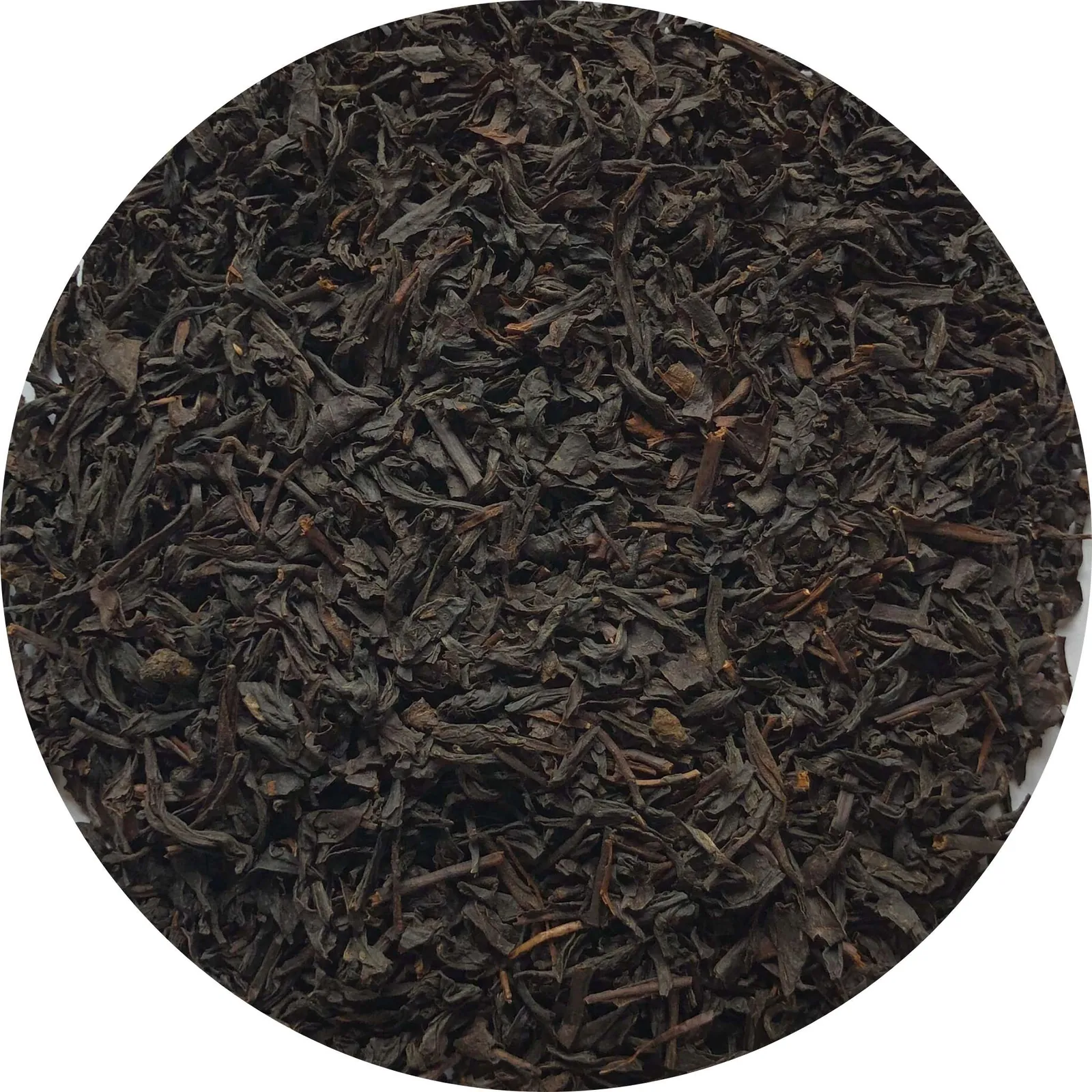
- OPA Black Tea (Orange Pekoe A): the largest leaf in our range — long, slightly twisted leaves, a step bigger than OP — with a full-bodied, aromatic cup. The big leaf looks impressive in a loose-leaf pack.
- OP Black Tea (Orange Pekoe): slightly curled black leaves of regular size. OP brews to a deep amber cup with a bold, malty flavor and a smooth, lingering citrus finish. It is the classic loose-leaf grade.
- Pekoe Black Tea: well-curled, black and heavy leaves that brew an orange-red liquor with a yellow border. A rich, full-bodied cup.
- TH Black Tea: short, wiry leaves with a bold, invigorating taste, a hint of natural sweetness and a crisp, refreshing aftertaste.
Whole-leaf grades are the usual choice for loose-leaf retail packs, for premium pyramid tea bags, and for flavored or scented blends where the leaf carries the flavor.
Broken grades: FBOP, BOP, PS and BPS
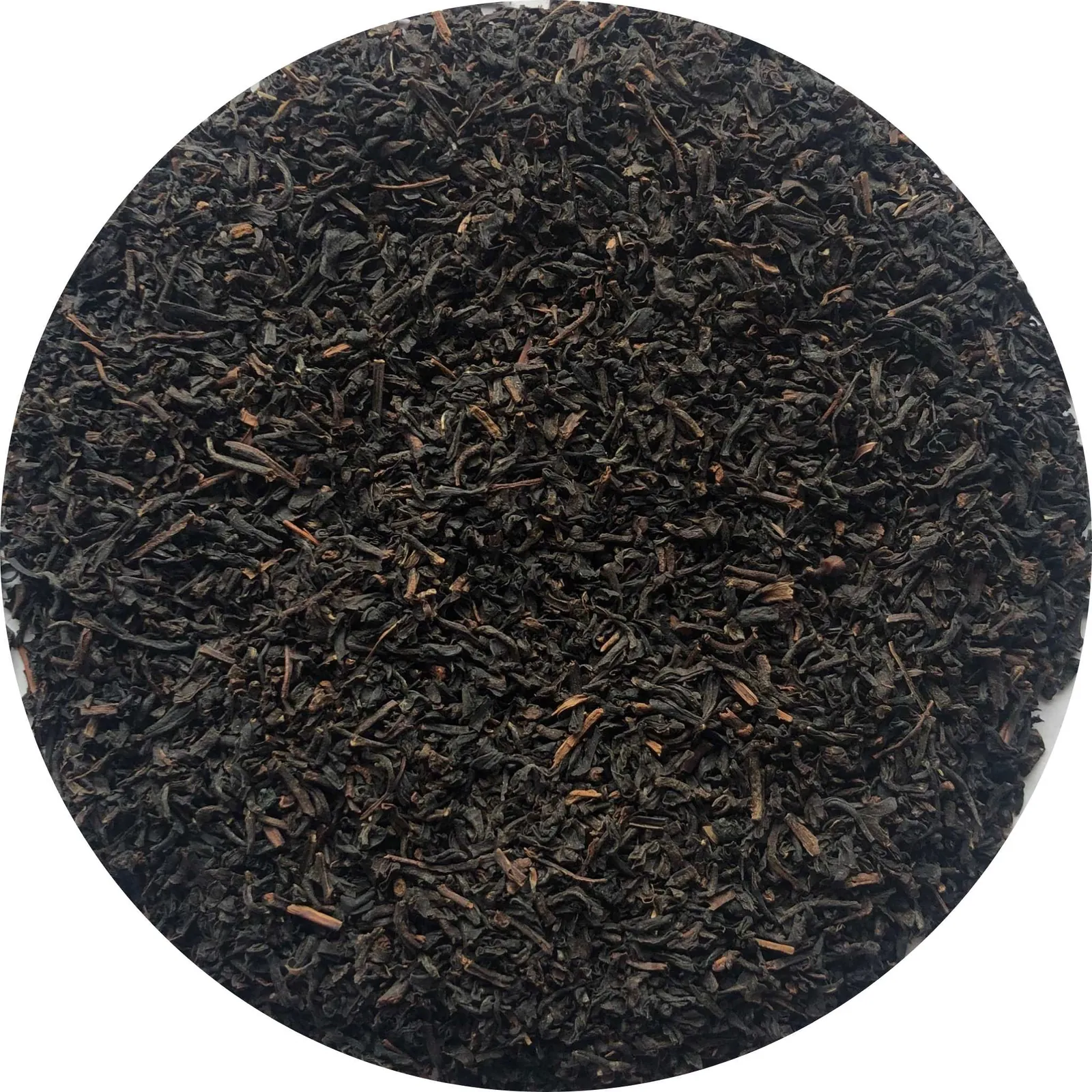
- FBOP and BOP Black Tea (Flowery Broken Orange Pekoe and Broken Orange Pekoe): made from young, tender buds and tips. FBOP has short, slightly wiry, less twisted broken leaves with a few silvery tips; BOP has smaller, neater leaves. FBOP is the higher grade, with more tips and a slightly milder but still robust cup. Both are popular for high-quality loose tea and premium tea bags.
- PS Black Tea (Pekoe Souchong): flaky leaves with a neat appearance and a smooth, malty, full-bodied taste.
- BPS Black Tea (Broken Pekoe Souchong): flaky, neat leaves smaller than PS, with a strong, intense black tea flavor. BPS is widely used in tea bags and for tea extract.
Broken grades brew faster and stronger than whole leaf while still showing visible leaf. They are the workhorse grades for tea bags and strong loose tea.
Fannings: F1, F2 and F3
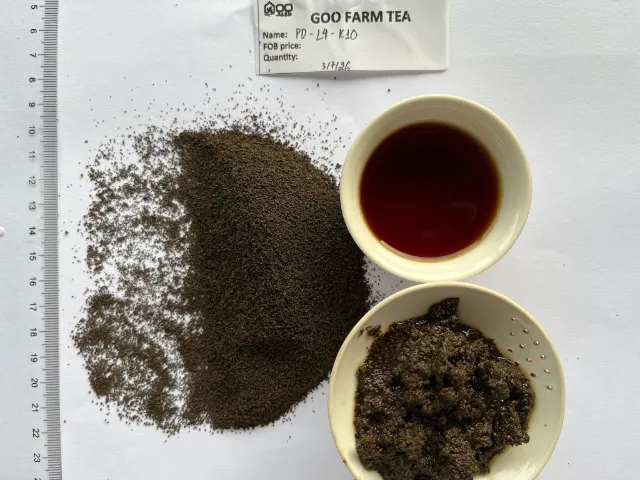
- F1 Black Tea (Fannings, first grade): small, blackish particles that infuse quickly and give a strong, invigorating brew. Used in tea bags and for tea extract.
- F2 and F3 Black Tea (off-grade fannings): finely broken small pieces with brown-yellow particles, an economical grade for tea bags and extract.
Dust and stalk
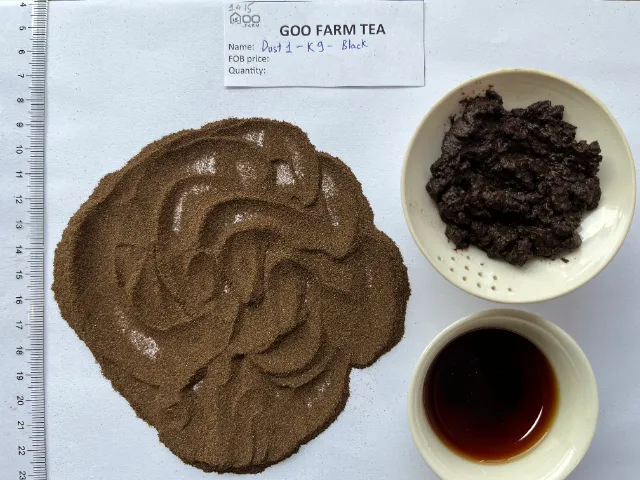
- Dust 1 Black Tea: fine blackish powder with a rich, full-bodied cup. Besides tea bags, dust grades are used in milk tea and bubble tea.
- Dust 2 and Dust 3 Black Tea (off-grade): brown-yellow fine powder at a lower price, for tea bags, milk tea and bubble tea.
- Stalk Black Tea: stalks of 0.5–1 cm, yellow-brown in color, with a golden-reddish liquor.
Our tea dust category lists further fannings and dust grades for tea bag and extract use — see our guide to Vietnam tea dust.
How to read an orthodox specification
Each grade on our website carries four lines, and a specification sheet gives the same four for the lot you are offered:
- Liquor — the color of the brewed tea: golden reddish with an orange tint for most grades, orange-red with a yellow border for Pekoe.
- Appearance — the dry leaf: long and twisted (OPA), slightly curled (OP), well-curled and heavy (Pekoe), short and wiry (TH, FBOP), flaky (PS, BPS), small particles (F1) or fine powder (Dust).
- Aroma — invigorating, with hints of floral notes.
- Flavor — malty, brisk and citrus notes with a sweet, lightly tannic aftertaste; OP adds a smooth, lingering citrus finish.
Two lots of the same grade can differ in brightness, tip content and strength depending on the garden, the season and the processing. Always start with a sample, brew it the way your customers will drink it, and compare it with your current supply. The approved sample becomes the standard for the order.
Which orthodox grade for which product
- Loose-leaf tea for retail: OPA, OP or Pekoe, where the leaf is part of what the customer pays for; FBOP where you want visible tips.
- Premium pyramid tea bags: OP, FBOP or BOP.
- Standard tea bags: BPS, PS or F1, which brew fast and fill the bag evenly.
- Flavored and scented blends: whole-leaf and broken orthodox grades carry bergamot, fruit or flower flavors well; our Earl Grey black teas are blended from orthodox grades such as OPA, PS, TH and stalk.
- Breakfast blends: BOP and PS for body, often blended with CTC grades for strength and color.
- Milk tea, bubble tea and extract: BPS, F1 and the dust grades.
Ask for two neighboring grades — for example OP and Pekoe, or PS and BPS — and brew them side by side with the same water, temperature and time. The difference in leaf size shows directly in the color and strength of the cup.
Container loading per grade
Leaf size decides how much tea fits in a container. With standard packing, a 40-foot high cube (40HC) container holds roughly:
- Dust: 28 tons
- Fanning: 26 tons
- FBOP and BPS: 22 tons
- BOP: 20 tons
- PS: 18 tons
- OP: 17 tons
- Pekoe and Stalk: 16 tons
- OPA and TH: 13 tons
A container of OPA therefore carries less than half the tea of a container of dust, and freight per kilogram is correspondingly higher for the large-leaf grades. These figures are for reference only; we confirm the exact quantity once we know your grade and packing. See the full table on our packing and loading page.
Packing Vietnam orthodox black tea for export
Orthodox black tea for bulk export is normally packed in:
- PP/PE bags — woven polypropylene bags with a polyethylene inner liner.
- Kraft paper sacks, stacked on pallets for container loading.
- Export cartons, which protect large-leaf grades such as OPA and OP from breaking in transit.
- Vacuum aluminum bags inside export cartons, for the longest shelf life.
We also pack under your own brand: custom-printed bulk bags, private-label tea bags and retail packs such as printed boxes, zip pouches, aluminum bags and tins. Tell us the pack size and the design and we will quote the packing together with the tea.
Where Vietnam orthodox black tea is sold
Goo Farm Tea Vietnam produces up to 6,500 tons of tea a year across all categories and has exported tea to more than 30 countries. Our customers are tea blenders, packers, distributors and wholesalers, and the main markets for Vietnam orthodox black tea are:
- CIS: Russia, Belarus, Ukraine, Azerbaijan, Kazakhstan, Kyrgyzstan, Tajikistan, Turkmenistan and Uzbekistan, where large-leaf and broken orthodox grades are brewed strong in the pot.
- Middle East and South Asia: Iraq, Turkey, Pakistan, Afghanistan, the UAE and Saudi Arabia.
- Southeast Asia: Indonesia, Malaysia, Thailand and Singapore.
- Africa and others: Nigeria, Chad, Egypt and Trinidad.
Each market has its own preferred leaf size and strength, so tell us how your customers brew and we will suggest the grades to sample.
Frequently asked questions
What does "orthodox" mean in black tea? It means the leaf was rolled in the traditional way rather than cut by CTC machines. The leaf stays whole or in pieces, oxidizes more slowly and gives a more aromatic, layered cup.
Is OPA better than OP? OPA is larger, not necessarily better. OPA has long, slightly twisted leaves and loads about 13 tons per 40HC; OP is slightly smaller and loads about 17 tons. Choose by the look you want in the pack and by freight cost per kilogram.
What is the difference between FBOP and BOP? FBOP contains more tips and golden buds and has short, slightly wiry leaves; BOP is smaller and neater. FBOP is the higher grade, with a slightly milder but still robust taste.
Which orthodox grade is best for tea bags? BPS, PS and F1 for standard bags; OP, FBOP or BOP for premium pyramid bags where the leaf is visible.
Do you supply samples and specification sheets? Yes. Tell us the grades you are considering and we will send samples with a specification sheet for each.
Request samples and a quotation
Tell us which orthodox grades you are considering, the quantity, the packing and your destination, and we will reply with samples and a quotation. Contact us, or browse all our orthodox black tea grades.