AR
 RU
 ZH
 UZ
 HI
 UR
 FA
 FR
 VI

Bulk Tea from Vietnam: From First Sample to a Loaded 40HC

In short: Buying bulk tea from Vietnam takes nine steps, and the approved sample sets the quality standard. Goo Farm has no minimum order, quotes FOB Hai Phong, lead time usually 5–15 days; a 40HC loads 13 tons of OPA or 28 of dust.
Buying bulk tea from Vietnam for the first time is less about finding a price than about getting nine steps in the right order. Most delays and disputes in a first order go back to a step that was skipped: a sample that was never formally approved, a quotation for the wrong grade, a container load nobody checked against the packing. This playbook follows one order from the first email to the bill of lading. It uses the figures we work with at Goo Farm Tea Vietnam, a manufacturer with two factories in northern Vietnam: order quantities, tons per container, indicative FOB prices and the documents that travel with the tea.
Buying bulk tea from Vietnam: the route at a glance
| Stage | You send | We send | What gets decided |
|---|---|---|---|
| 1. Brief | End use, market, quantity, packing, destination port | A proposal of grades | Which grades to sample |
| 2. Samples | Delivery address | Samples with specification sheets | |
| 3. Approval | The code of the sample you approve | Written confirmation | The quality standard for the order |
| 4. Quotation | Quantity, packing, Incoterm, shipment month | A written quotation | Price, Incoterm, lead time |
| 5. Proforma | Order confirmation | Proforma invoice | Payment terms, shipment date |
| 6. Production | Lot produced or drawn from stock, sorted and checked against the sample | ||
| 7. Inspection | Your inspection or testing request | Arrangement with SGS, Dai Viet Control or Eurofins | Pre-shipment results |
| 8. Loading | Shipping marks, labels | Packing and container loading | Final tons per container |
| 9. Documents | The list your customs broker needs | Export documents | Clearance at your port |
Stage 1: start from the cup, not from a grade name
Grade names travel badly. "BOP" means one tea in an orthodox factory and another in a CTC factory; "dust" can be a premium tea bag grade or an off-grade. The safest brief describes the product you make and the cup your customers expect, and lets the grade follow:
| Your product | Grades to sample first |
|---|---|
| Loose black tea for retail | OPA, OP, Pekoe or FBOP (orthodox black tea) |
| Standard black tea bags | BPS, PS, F1, or CTC PF and PD (CTC black tea) |
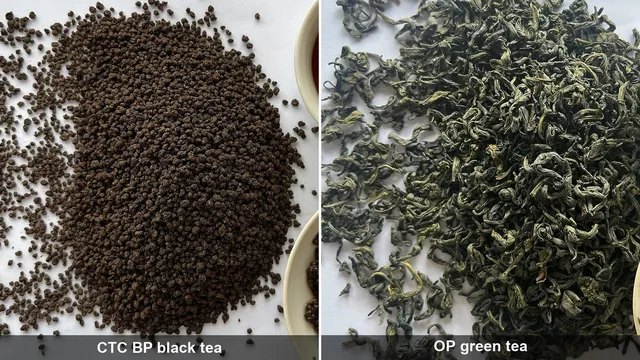
| Milk tea, bubble tea, chai | CTC BP, PF and PD, or dust (tea dust) |
| Extract and instant tea | Dust and fannings, including off-grades |
| Green tea bags | Fannings, BPS, PS (green tea) |
| Mint tea and loose green tea | Madina, BOM, Pekoe, OP green |
| Earl Grey and jasmine | Our flavored tea grades, or the base grade for your own blend |
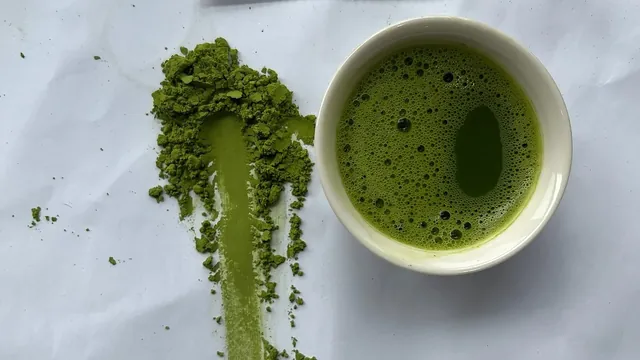
| Specialty ranges | Jin Xuan oolong, Snow Shan green tea, matcha (other tea) |
Each of these choices has its own guide: OPA, OP and Pekoe compared side by side for loose black tea, orthodox FBOP and BOP versus CTC BOP, green tea fannings and dust for tea bags, green tea for mint tea and natural versus flavored milk oolong.
If you are not sure which grade fits, send us a sample of the tea you buy today. Matching an existing tea is often faster than describing one.
Stages 2 and 3: the sample becomes the contract
We send samples of the grades we propose, each with a specification sheet that gives liquor, appearance, aroma and flavor for the lot on offer. Our tea grades and specifications catalogue shows many of these samples by code, so you can compare photos before anything is posted.
Taste the samples the way your customers will drink the tea, and next to your current supply. When one passes, approve it in writing and quote its code. From that moment the approved sample is the standard for the order: every lot we ship must be the same as or better than it. Keep part of the sample sealed. It is your reference when the shipment arrives.
Stage 4: reading the quotation
A quotation fixes four things: the price per kilogram, the Incoterm, the quantity and the lead time for your lot.
- Incoterm. We quote FOB Hai Phong, CFR or CIF to your port, or DAP to your address. FOB means the price covers the tea, export packing and delivery on board the vessel at Hai Phong; sea freight, insurance and import duties are for your account.
- Price. Our indicative FOB Hai Phong ranges per grade are published on our Vietnam tea prices page. The quotation fixes the price for your lot, because grade, quantity, packing and the time of year all move it.
- Quantity. There is no minimum order; the price depends on the quantity, and several grades can share one container. On our product pages the indicative price per kilogram steps down for orders from 4 and from 10 containers.
- Lead time. Usually 5-15 days after order confirmation. It depends on the grade, the season and what is in stock, and the date for your lot is stated in the quotation.
A worked example: one 40HC of PS black tea
| Grade | PS black tea, orthodox Pekoe Souchong |
| Container load | About 18 tons per 40HC with standard packing |
| Indicative FOB Hai Phong, October 2026 | USD 0.70–0.74 per kg |
| Tea value of one container, FOB | USD 12,600–13,320 |
| Indicative price per kg from 1, 4 and 10 containers | USD 0.74, 0.73 and 0.70 |
| Sea freight per kg | USD 0.056 for every USD 1,000 the container costs to ship |
| On your side of the ledger | Sea freight and insurance, import duty and taxes, customs broker, inland delivery |
Now change the grade and keep the container. One 40HC holds about 26 tons of F1 fannings, worth USD 15,600–20,800 at its indicative FOB range of USD 0.60–0.80 per kg, but only about 13 tons of OPA black tea, worth USD 10,920–18,070 at USD 0.84–1.39. The freight bill is the same for all three containers, so freight per kilogram for OPA is twice that for F1. Compare offers on landed cost per kilogram at your port, never on the FOB line alone.
Stage 5: the proforma invoice
Once you accept the quotation, we issue a proforma invoice. Check that it names the grade and the code of the approved sample, the quantity, the packing and marks, the price and Incoterm, the shipment date and the payment terms. Payment terms are agreed for each order; in the tea trade, common arrangements include a bank-transfer deposit with the balance against a copy of the bill of lading, cash against documents, or a letter of credit.
Stages 6 and 7: production, checking and inspection
After the proforma is confirmed, the lot is produced or drawn from current stock in our own factories in Phu Tho and Yen Bai, or, for a specialty tea, brought in from our partner garden; it is sorted and compared with the approved sample before it is packed. Moisture is kept within the specification of each grade, at most 6 to 7 percent, and a certificate of analysis comes with each lot.

If your market or your customer requires it, third-party inspection by SGS or Dai Viet Control and laboratory tests by Eurofins for pesticide residues and heavy metals can be arranged for your shipment before it leaves. Our Yen Bai factory is ISO 22000:2018 certified by Vinacontrol, certificate No. 31905-FSV, for the manufacturing and trading of dried tea, and our GACC registration covers exports to China.
Stage 8: packing and loading
Bulk tea leaves our factories in woven PP bags with a PE liner, kraft paper sacks, export cartons or vacuum aluminum bags inside cartons. Long-leaf grades travel better in cartons; fine grades need a liner so that they stay dry and do not sift out. For private label we print bulk bags with your brand or pack finished retail packs and tea bags. Send your shipping marks and label text with the order.
How much fits depends on the grade:
| Category | Tons per 40HC |
|---|---|
| Orthodox black tea | 13–28 (OPA 13, OP 17, Pekoe 16, BOP 20, PS 18, BPS 22, fannings 26, dust 28) |
| CTC black tea | 23–26 (BOP 23, BP 24, PF 25, PD 26) |
| Green tea | 14–28 (OPA 14, OP 17, Pekoe 18, Madina 25, BPS 23, fannings 26, dust 28) |
| Tea dust | 22–28 |
| Flavored tea | Follows the base grade |
| Oolong, Snow Shan, yellow tea and matcha | Confirmed per order |
The figures assume standard packing; we confirm the exact quantity for your packing before you order. Photos and every pack type are on our packing and loading page.

Stage 9: documents
Tell us the documents your customs broker needs when you order, not when the ship has sailed. A typical set for bulk tea from Vietnam:
- Commercial invoice and packing list
- Bill of lading
- Certificate of origin, in the form your market requires
- Phytosanitary certificate
- Certificate of analysis for the lot
- Inspection certificate and laboratory reports, if you ordered them
Import registrations on your side, such as FDA requirements for the United States, are your responsibility as importer; our guide to importing tea from Vietnam to the USA walks through one example.
Six mistakes we see in first orders
- Asking for a grade name without a use. "Please quote BOP" can mean two different teas. Say orthodox or CTC, or quote a sample code.
- Comparing FOB prices across grades with different loads. 13 tons of OPA and 26 tons of F1 cost the same to ship.
- Approving a sample by phone. Approve in writing, with the code, and keep part of the sample.
- Testing a sample differently from the customer. A tea bag grade judged in a teapot, or a milk tea grade tasted without milk, will mislead you.
- Forgetting the packing. Long leaf in soft sacks arrives broken; fine dust without a liner arrives damp.
- Leaving documents to the end. A missing certificate can hold a container at the port longer than the voyage took.
Frequently asked questions
What is the minimum order for bulk tea from Vietnam? With us there is none: the price depends on the quantity, and several grades can share one 20ft or 40HC container. For oolong, Snow Shan, yellow tea and matcha, which are produced in smaller quantities, we confirm the available quantity per order.
Which port do you ship from? Hai Phong, the main seaport of northern Vietnam and the nearest major port to our factories in Phu Tho and Yen Bai.
Do you quote CIF or only FOB? Both. We quote FOB Hai Phong, CFR or CIF to your port, or DAP to your address.
How long does an order take? Usually 5-15 days after order confirmation. The date for your lot is stated in the quotation and depends on the grade, the season and current stock. Transit time then depends on your route.
Can you pack under our brand? Yes: printed bulk bags, private-label tea bags and retail packs such as boxes, zip pouches, aluminum bags and tins.
Are you a manufacturer? Yes. Our standard export grades are made in our own factories in Phu Tho and Yen Bai, about 7,000 tons a year, and our team brings more than 40 years of experience in tea. Small-harvest specialty teas such as Snow Shan come from a partner garden in the northern mountains and are checked against the approved sample like every other lot. If you are comparing suppliers, our article on how to choose a reliable supplier lists the checks worth making.
Can I visit the factories before ordering? Yes. Tell us when you plan to come and we will arrange a visit to our Hanoi office and the factories; see our factories and gardens.
Start with a brief
Send us your product, market, quantity, packing and destination port, and we will reply with a grade proposal, samples and a quotation. Our wholesale Vietnamese tea page summarizes the range and terms, or you can contact us directly.
Sources
- International Chamber of Commerce, Incoterms 2020: FOB, CFR, CIF and DAP as used in the quotation stage.
- European Union, Regulation (EC) No 396/2005 on maximum residue levels of pesticides in food and the EU Pesticides Database.
- US Environmental Protection Agency, 40 CFR Part 180: Tolerances for pesticide chemical residues in food, eCFR.
- ISO, ISO 22000:2018 Food safety management systems: Requirements for any organization in the food chain, 2018.
- Vinacontrol CE, certificate lookup for ISO 22000:2018 certificate No. 31905-FSV, accessed October 2026.