AR
 RU
 ZH
 UZ
 HI
 UR
 FA
 FR
 VI

Hanoi Iced Tea: Trà Đá Sidewalk Culture, Prices and Tips

Hanoi iced tea, or trà đá, is green tea brewed strong and poured over ice, almost never with sugar or milk (Vietnam Coracle). Saigon (Ho Chi Minh City) is known for iced coffee; Hanoi is known for iced tea on the sidewalk (VnExpress International). In September 2025 a glass cost 4,000–5,000 dong, less than 20 US cents (VietNamNet).
Last updated 4 October 2026.
What trà đá is
Trà đá simply means "iced tea". Most stalls brew dried tea (trà mạn), whose dark leaves curl into small hooks and give a strong taste. Some brew fresh tea leaves (trà tươi) for a milder drink (VnExpress International). The first sip is bitter; a sweet aftertaste follows (VietNamNet).
It is not a premium tea. Stalls use tea that costs a few tens of thousands of dong per kilogram, not specialty Thai Nguyen tea (Kenh14, 2016). One vendor put the cost of the tea and ice in a 200 ml glass at about 250 dong (VTC News, 2018).
Iced tea is a young habit in an old tea culture. Ice reached Hanoi under French rule but stayed scarce, and tea with ice spread only after the subsidy era, when refrigerators became common (VnExpress International). Hanoi took up this southern habit widely in the 1990s (Vietcetera).
How a sidewalk tea stall works
A stall needs very little: a teapot, a thermos of hot water, a box of ice and a stack of low plastic stools. Customers use a second stool as a table. Many vendors are older men and women (VietNamNet).
A small table holds peanut candy (kẹo lạc), sunflower seeds (hướng dương), chewing gum and cigarettes, next to pots of two herbal drinks, nước vối and nhân trần (VTC News). Peanut candy is the classic partner for bitter tea. For many families, the stall has been the main income for years (VnExpress International).
How much a glass costs
Trà đá is one of the cheapest drinks in Hanoi. Locals even measure small costs in glasses of iced tea. A glass once cost 500 dong (VnExpress International).
| Year reported | Typical price per glass | Source |
|---|---|---|
| 2016 | 2,000–5,000 dong | VnExpress International |
| 2018 | 3,000–5,000 dong | VTC News |
| 2022 | 3,000–5,000 dong | VietNamNet |
| September 2025 | 4,000 dong in most districts; 5,000 in central Hoan Kiem and Ba Dinh; 10,000–15,000 in restaurants | VietNamNet |
In summer 2025, many stalls moved from 3,000 to 4,000 dong, citing higher prices for tea and rent. Coffee still cost 25,000–50,000 dong and milk tea 30,000–70,000 dong (VietNamNet).
When and why people drink it
Hanoians drink trà đá from early morning until late at night (VnExpress International). It follows a breakfast bowl of phở (noodle soup), keeps office workers alert after lunch and comes with meals in most eateries. Trà đá không? ("Iced tea?") is how colleagues suggest a break (VietNamNet).
People stop to beat the heat, rest their legs, wait for someone or simply sit and talk (Kenh14). Across Vietnam, iced tea used to come free with food; many places now charge a small fee (Vietnam Coracle).
The tea stall as a meeting place
At a tea stall, everyone sits on the same low stool: retirees, students and office workers in suits (VnExpress International), and delivery riders between orders. The talk runs from politics to office life and neighborhood news. Vietnamese call this easy chatter chém gió, literally "slashing the wind" (VietNamNet).

Locals say that if you want to know something, ask the tea lady. Students met at the stall outside the school gate, and vendors let regulars drink on credit (VnExpress International). The habit even has its own song, Hà Nội trà đá vỉa hè ("Hanoi sidewalk iced tea"), sung by Đinh Mạnh Ninh (Kenh14).
Lime tea and hot tea
- Lime tea (trà chanh): green tea with fresh lime juice, a little sugar and ice. Many say the trend began in 2009 on Dao Duy Tu Street. Today young people drink it around St. Joseph's Cathedral, with sunflower seeds, for about 25,000 dong a glass (Vietnam Coracle).
- Hot tea (trà nóng): in the north, many people switch to hot tea from November to February (Vietnam Coracle). Older men drink it strong, without ice, over Chinese chess (VietNamNet).
How to try Hanoi iced tea as a visitor
- Find a stall. Look for low stools and a thermos. Stalls cluster in the Old Quarter and around Hoan Kiem, Truc Bach and West Lake (VnExpress International).
- Order. Sit down and say một trà đá (one iced tea), or trà nóng for hot tea. Pay when you leave, in small notes.
- Ask the price first at tourist spots. In 2018, VTC News reported a bill from a stall on Long Bien Bridge that charged 50,000 dong for the mat the customers sat on (VTC News).
- If you have a sensitive stomach, choose a busy stall or order hot tea.
- Take your time. Watching the street is part of the drink.
What trà đá means for Vietnam's tea market
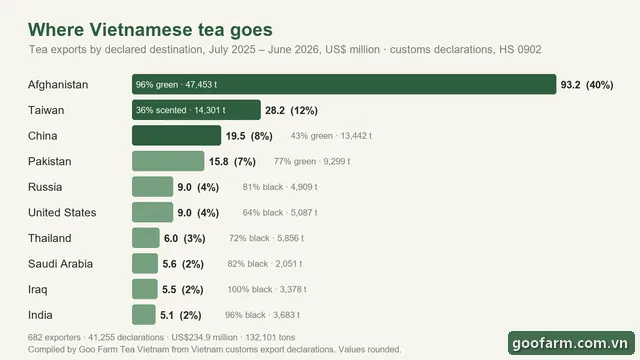
Vietnam is known abroad as an exporter, but its home market is worth more. Vietnamese drink about 45,000–50,000 tons of tea a year, worth some $320 million. Exports are three times larger, at 145,000–150,000 tons, but earn only about $240 million, according to PSAV, a public–private agriculture partnership. Green tea is the local favorite, led by the classic teas of Thai Nguyen (STiR).
Hanoi iced tea is the everyday end of that market, and it feels tea prices directly: higher tea prices were one reason for the 2025 price rise (VietNamNet). In big cities, coffee shops and sweet milk tea have made it a little less common (Vietnam Coracle). For a tea maker, the glass is a hard test: tea brewed strong, served cold and drunk plain has nowhere to hide. Goo Farm Tea Vietnam makes green tea at its factories in Phu Tho and Yen Bai, with leaf from across northern Vietnam, including Thai Nguyen.
Frequently asked questions
What is trà đá? Vietnamese iced tea: green tea brewed strong and poured over ice, usually without sugar.
How much does iced tea cost in Hanoi? In September 2025, 4,000–5,000 dong a glass at sidewalk stalls, less than 20 US cents, and 10,000–15,000 dong in restaurants.
Is trà đá sweet? No. It is bitter at first, with a sweet aftertaste. For a sweet drink, order trà chanh, lime tea with sugar.
What tea do stalls use? Mostly inexpensive dried green tea (trà mạn), sometimes fresh tea leaves (trà tươi), rarely specialty grades.
How do you make trà đá at home? Rinse 8–10 g of dried green tea with boiling water and pour it off. Add 300 ml of water just off the boil, steep for 3–4 minutes and pour over two glasses of ice. For a softer taste, use water at about 85°C.
Explore Vietnamese green tea
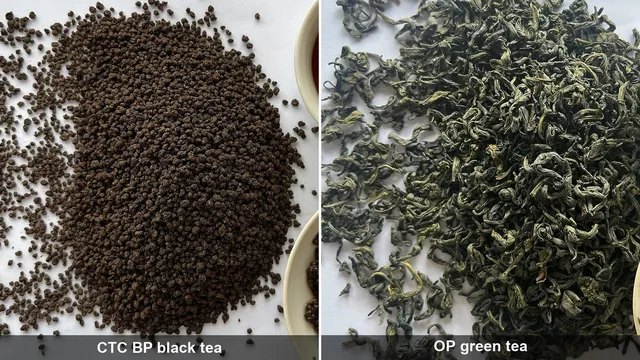
To taste the leaf behind the glass, browse our green tea range, from whole-leaf OP, OPA and Pekoe to broken grades, fannings and dust. Our guide to Vietnamese green tea grades explains how the grades differ in leaf, liquor and taste.